


Protezhe, RC, (Bentazon, 560 g
Jiangsu Agricoem Laboratory Co., Ltd.
Herbicides
0
0
·
27
3 offers
9.59 €per 1 l
Buy
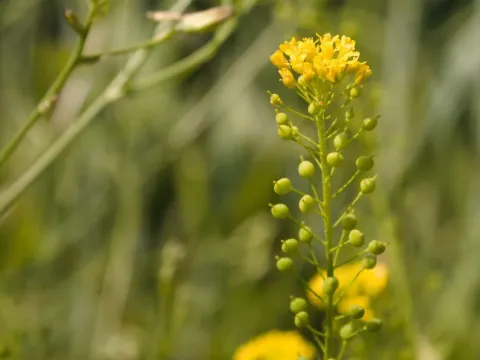
Neslia
Neslia paniculata is primarily a spring annual plant that germinates during early spring months. The seeds are capable of germinating at soil temperatures as low as +2 to +4 degrees Celsius.
The optimal germination depth for seeds ranges from 1 to 5 centimeters. Deeper placement significantly inhibits germination, which is a critical factor for soil management.
Mass emergence of seedlings typically occurs in March or April, coinciding with the sowing of early cereal crops. Seedlings that emerge in autumn rarely survive the winter.
The flowering period takes place in May and June, during which the plant develops its primary reproductive potential. Seed maturation occurs in July, posing a risk of contaminating harvested grains.
Strategic tillage and crop rotation are essential to prevent the spread of this plant and to ensure that agricultural fields remain free of significant weed competition.
As a member of the Brassicaceae family, Neslia prefers well-drained, fertile soils. It thrives particularly well on loamy and sandy-loam soils that are rich in calcium.
The plant demonstrates high adaptability to various climatic zones, showing remarkable cold tolerance throughout its early growth stages.
Moisture availability plays a key role in the plant's development. While it is moderately drought-tolerant during maturation, it requires consistent moisture to reach its full vegetative potential.
Neslia is highly photophilous and struggles to survive in environments with high crop density or significant shading, which naturally limits its growth in well-managed fields.
From an agricultural standpoint, it is primarily categorized as a weed rather than a crop, and its presence can lead to reduced yields in cereals and oilseed crops.
Neslia is susceptible to several fungal diseases common to the Brassicaceae family, such as powdery mildew and white rot, which can impede its growth.
Crucifer flea beetles are among the primary pests that attack Neslia seedlings, often causing significant damage to the cotyledons and young leaves.
Stem weevils may also infest the plants, with larvae boring into the stems and potentially weakening the plant structure during the reproductive phase.
Chemical control involving selective herbicides is common practice when the population density exceeds economic thresholds in cereal fields.
Integrated weed management, including mechanical cultivation and proper chemical application, remains the most effective way to protect crop yield from this competitor.