
Water mimosa
Neptunia oleracea
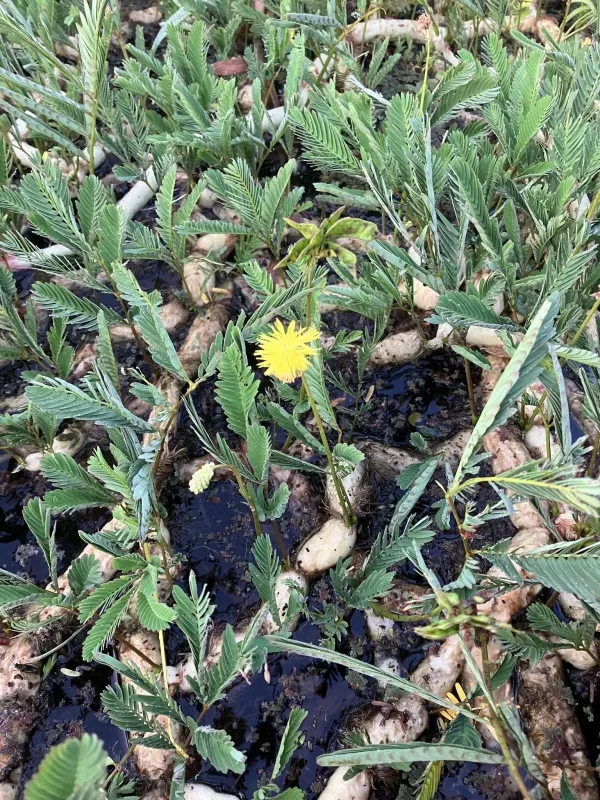
Description
Sowing dates
Neptunia oleracea, commonly known as water mimosa, is a perennial aquatic legume that propagates primarily through vegetative cuttings. The stems are capable of rapid rooting when placed in nutrient-rich aquatic environments or saturated mud.
The optimal planting time begins when water temperatures remain consistently above 20°C. For successful establishment, cuttings should be secured in the pond bottom or kept in mesh baskets to ensure access to essential minerals present in the sediment.
Seed-based propagation is less common due to the plant's highly efficient stem-branching growth habit. In tropical climates, planting can occur year-round provided that temperatures do not drop to freezing levels, which are fatal to the plant.
Spacing is a critical factor for canopy management; growers should leave enough surface area for the plant to spread. Proper spacing ensures adequate light penetration to all parts of the submerged and floating biomass, preventing stunted development.
In integrated farming systems, water mimosa is often cultivated alongside rice paddies. This practice maximizes land use and leverages the plant's nitrogen-fixing capabilities to improve the overall fertility of the aquatic ecosystem.
Growing requirements
As a true hydrophyte, water mimosa requires a permanent water source to thrive. It performs best in stagnant or slow-moving water bodies where the depth allows it to float and develop its specialized spongy tissue, known as aerenchyma.
The crop is highly thermophilic, requiring air and water temperatures between 25°C and 32°C. It is extremely sensitive to cold and will perish under frosty conditions, making it suitable only for greenhouses or warm climates.
The substrate at the bottom of the water body should be rich in organic matter and silt. Because of its symbiotic relationship with nitrogen-fixing bacteria, the plant can successfully colonize environments where soil nitrogen might otherwise be limiting.
High light intensity is essential for vigorous growth. Direct sunlight stimulates the development of lush, succulent stems, which are the primary part of the plant harvested for consumption.
Water quality is paramount to the plant's health. The presence of chemical runoff, pesticides, or excess chlorine can inhibit root development and decrease product quality, necessitating the use of clean water inputs.
Yield
The yield of water mimosa is heavily dependent on the frequency of harvesting. Regular pruning of the stems encourages active side-branching, leading to continuous production of new, tender shoots throughout the growing season.
Under optimal conditions, harvests can be conducted every 10 to 14 days. This makes it a high-turnover crop for small-scale farmers who supply local markets with fresh, nutritious aquatic greens.
In Southeast Asia, where water mimosa is a popular vegetable, harvesting is performed manually. Farmers carefully select only the most succulent parts of the stems, ensuring that fibers have not yet become too tough or lignified.
Productivity increases significantly in ponds enriched with phosphorus and nitrogen, often found in integrated aquaculture-agriculture systems where water contains fish waste nutrients.
While absolute yield estimates vary by water condition, water mimosa is recognized as an exceptionally productive crop, requiring minimal external chemical intervention while offering high returns on biomass per hectare.
Main diseases and pests
The main pests attacking water mimosa are sap-sucking insects like aphids and spider mites, which congregate on the floating foliage. Early detection is crucial to prevent these pests from spreading and causing significant yellowing or decline.
Fungal pathogens flourish in high-humidity, low-circulation environments, potentially leading to stem rot. Maintenance of good water flow and the immediate removal of infected plant debris are essential preventative measures.
Aquatic mollusks and snails frequently graze on the tender, submerged sections of the stems near the surface. Managing snail populations is necessary to ensure the marketability and visual quality of the harvested produce.
Competition from invasive aquatic weeds, such as water hyacinth, can quickly smother water mimosa patches. Regular pond cleaning is required to maintain the specific light and space conditions needed for healthy development.
Micronutrient deficiencies, particularly iron deficiency, can manifest as leaf chlorosis. Adjusting water chemistry and using appropriate aquatic-safe fertilizers can prevent these physiological disorders and improve crop vitality.
Harvesting
Harvesting should ideally occur in the early morning hours when plant tissues are fully turgid and contain maximum moisture. This ensures the best culinary quality and shelf life for the collected stems.
Using sharp shears or knives, growers prune the top 15–20 centimeters of the shoots. This selective harvesting method prevents damage to the main root system and encourages the plant to continue producing secondary growth.
Immediately after cutting, the produce must be cooled or placed in fresh, clean water to prevent rapid wilting. Because the plant has high moisture content, it is sensitive to heat stress during post-harvest handling.
Cleaning the harvest of silt and aquatic organisms is a critical final step. A high-quality, clean product is essential for consumer acceptance, as the vegetable is frequently consumed fresh or lightly blanched.
Short-term storage should take place at temperatures between 5°C and 8°C in a high-humidity environment. Perforated plastic packaging can help maintain product freshness for several days before reaching the end consumer.