
Yellow puff
Neptunia lutea
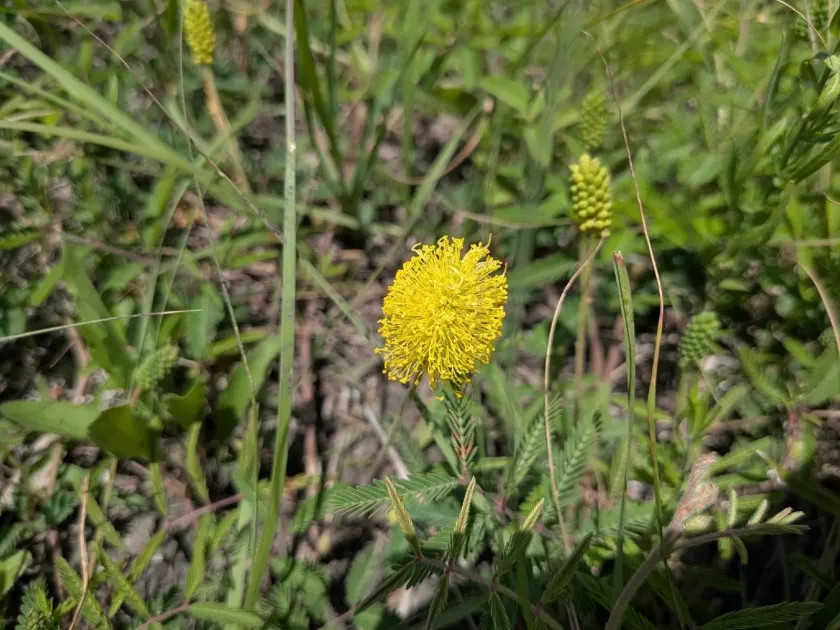
Description
Sowing dates
The Yellow puff (Neptunia lutea) is a perennial legume originating from North America. Its cultivation requires specific attention to seed preparation, as the seeds possess a hard coat that benefits from scarification to improve germination rates.
Sowing should be performed in the spring once the soil temperatures consistently reach at least 20 degrees Celsius. Planting depth should be kept shallow, typically no more than two centimeters, to ensure proper light exposure for the developing seedling.
For agricultural purposes, the plant prefers well-drained but moist soil conditions. The seeding density should be carefully managed to avoid overcrowding, which can lead to poor air circulation and increased humidity around the lower parts of the plant.
Once established, the plant exhibits moderate to fast growth rates depending on soil fertility and light availability. Early spring planting allows the plant to take full advantage of the growing season before the peak heat of summer.
It is important to ensure that the soil contains the necessary symbiotic bacteria for nitrogen fixation. If the soil lacks these natural rhizobia, inoculation of the seeds prior to planting can significantly improve overall plant vigor and development.
Growing requirements
The plant thrives in sunny environments and is highly intolerant of shade. Adequate sunlight is essential for maintaining the health of the foliage and ensuring the production of its characteristic yellow, puff-like flowers.
Soil requirements include high moisture retention, as the species is native to prairies and low-lying areas that receive consistent rainfall. It is capable of surviving temporary saturation, which is a unique trait among many land legumes.
Soil fertility plays a significant role in plant health. While the species can fix its own nitrogen, supplemental phosphorus and potassium may be necessary to support the energy demands of flowering and seed production.
Managing competition from weeds is critical during the establishment phase. The Yellow puff grows slowly at the seedling stage, making it vulnerable to invasive grasses and broader leaf weeds that can easily outcompete it for resources.
Regarding climate, the plant prefers warm temperatures and is well-adapted to the humid subtropical conditions of its range. In areas with harsh winters, the top growth is expected to die back, requiring root protection.
Main diseases and pests
Fungal pathogens represent the most significant threat to the crop, particularly under conditions of poor soil aeration. Root rot is a common issue when water drainage is inadequate or when the soil remains stagnant for too long.
Pests such as aphids and various leaf-feeding larvae are known to attack the plant. Regular monitoring of the foliage is necessary to detect infestations early, allowing for targeted and environmentally friendly management strategies.
Environmental stress, such as prolonged drought, can make the plants more susceptible to secondary infections and pest pressure. Maintaining a steady, appropriate moisture level is the best preventative measure against such issues.
Over-fertilization with nitrogen can sometimes lead to excessive vegetative growth at the expense of floral development, which may indirectly weaken the plant's resistance to environmental stressors and localized diseases.
Integrated pest management (IPM) practices are highly recommended. These include crop rotation, the use of beneficial insects, and manual weed control to ensure the longevity and productivity of the Yellow puff cultivation site.
Harvesting
Harvesting for forage purposes should ideally occur before the plant reaches full maturity to maximize the nutritional value of the foliage. Frequent mowing or grazing can stimulate regrowth if the root system is well-established.
When harvesting for seeds, the process requires waiting until the pods begin to dry on the plant. Care must be taken to gather them promptly, as the pods can shatter and release seeds into the environment if left too long.
Mechanical harvesting equipment should be calibrated carefully to avoid damaging the delicate stems and root structures of the plants. Using sharp blades ensures clean cuts that promote rapid recovery after harvest.
Post-harvest handling is critical to maintaining the quality of the harvested material. Proper drying and storage in cool, ventilated areas are essential to prevent the development of mold, which is common in leguminous crops.
Cleaning the seeds after harvest involves sieving and air-sorting to remove debris and chaff. Properly cleaned and dried seeds can maintain viability for several seasons if kept in appropriate conditions.