
Neptunia monosperma
Neptunia monosperma
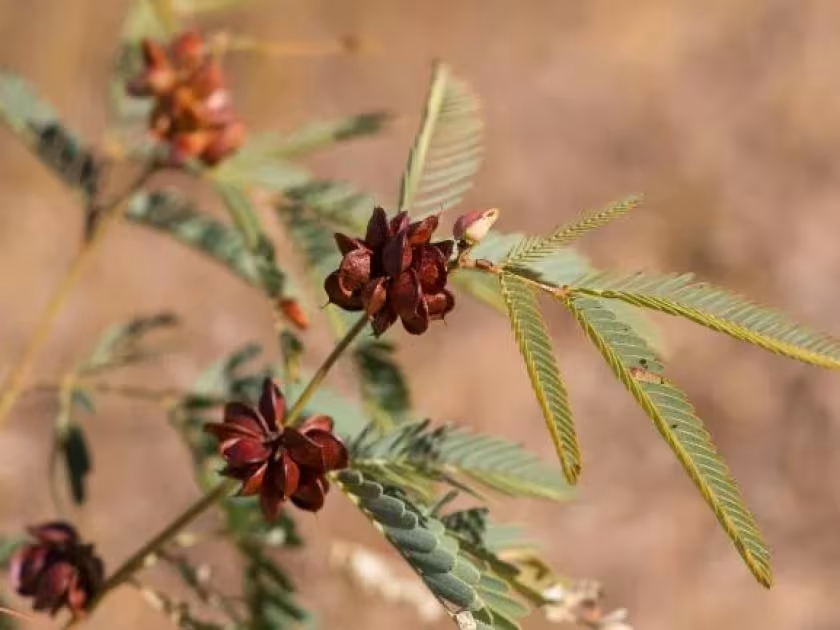
Description
Sowing dates
Neptunia monosperma belongs to the Fabaceae family and is known for its semi-aquatic growth habits, often thriving in wetland or riparian environments. When cultivated, seeds should be sown into well-warmed soil, ideally when ambient temperatures consistently remain above 20-25 degrees Celsius to ensure rapid germination.
The optimal time for sowing is generally following the wet season, which provides the necessary moisture levels for young seedlings to establish their root systems quickly. It is crucial to maintain a sowing depth of only 1–2 centimeters, ensuring that seeds have good contact with moist soil without being buried too deeply.
In regions with distinct seasonal changes, this plant displays rapid initial growth, producing creeping stems that cover the ground quickly. Using high-quality, clean seeds is essential to achieve uniform emergence within 10-14 days, provided that temperature and moisture conditions are well-managed.
To improve germination rates, seeds may require scarification due to the hard seed coat typical of many tropical legumes. Preparing the seedbed involves thorough weed clearance, as young Neptunia plants are sensitive to competition from aggressive, fast-growing weeds during their early development stages.
Maintaining proper plant density is critical for maximizing biomass production. When sowing in rows, a spacing of 30–45 centimeters between rows is recommended, as this facilitates easy access for maintenance and allows sufficient sunlight to reach all parts of the developing plants.
Growing requirements
This crop has high water and light requirements, making it particularly well-suited for moist or even waterlogged soils where other agricultural crops might struggle due to root hypoxia. Its ability to tolerate wet conditions makes it an excellent choice for poorly drained land.
Neptunia monosperma thrives in fertile soils with a neutral to slightly acidic pH. The presence of symbiotic nitrogen-fixing bacteria in the soil is vital, as it enhances the plant's ability to fix atmospheric nitrogen, thereby improving soil fertility and overall crop vigor.
The plant is highly photophilous and does not tolerate shading by taller vegetation or trees. Lack of adequate sunlight leads to thin, spindly stems and reduced biomass, which significantly lowers the overall yield and nutritional quality of the fodder.
Temperature regulation is paramount for successful cultivation; the plant is highly sensitive to freezing and even brief cold spells can stall metabolic processes. The ideal temperature range for active growth is between 25 and 32 degrees Celsius, coupled with high relative humidity.
Agronomic management includes regular irrigation if rainfall is insufficient to maintain constant soil moisture. During drought conditions, the plant loses leaf turgor quickly, which negatively affects both the palatability and the quality of the harvested green fodder.
Yield
The yield of Neptunia monosperma depends largely on soil fertility and the frequency of fertilizer application. Under optimal conditions, this crop is capable of producing multiple harvests of green matter within a single growing season, making it a highly productive option for tropical climates.
The primary agricultural use of this plant is as a high-protein fodder for livestock. The biomass is characterized by a soft texture and high palatability, making it suitable for both direct grazing and as a harvested additive in animal diets.
A key feature of the plant is its regenerative capacity after harvesting. If cut at an optimal height of 5–7 centimeters above the soil surface, Neptunia rapidly recovers, ensuring a stable supply of biomass throughout the entire growing season.
Biomass accumulation is closely linked to the efficiency of nitrogen fixation. With proper root nodule development, the plant demonstrates intense growth, potentially yielding 20–30 tons of green matter per hectare per season under intensive management practices.
Applications of phosphorus and potassium-rich fertilizers support stem strength and increase the nutritional density of the harvest. The most appropriate time for cutting, to achieve the highest protein content, is during the early flowering phase.
Main diseases and pests
The main threats to plantations include fungal diseases of the root system, which can develop in waterlogged conditions or due to poor crop rotation. Prevention involves implementing adequate drainage and rotating Neptunia with non-legume crops to break disease cycles.
Pests such as aphids and spider mites can cause damage to young shoots and leaves. Their activity is most pronounced during dry periods when the plant's natural defenses are slightly weakened due to environmental stress.
For pest control, biological methods are recommended, such as encouraging the presence of natural predators or using botanical extracts, which is particularly important for maintaining organic and environmentally friendly production standards.
Root-knot nematodes can also be a significant issue, leading to stunted growth and yellowing leaves. If infestation occurs, affected plants must be removed immediately, and soil disinfection or long-term fallowing may be required.
Weeds are the primary competitors for nutrients and light during the early growth stages. Timely weeding and soil cultivation are mandatory practices for protecting the crop in the first few weeks after emergence.
Harvesting
Harvesting Neptunia monosperma requires care to ensure the plant's ability to regrow. Harvesting is typically done mechanically or manually at the onset of flowering, when the concentration of nutrients in the stems is at its peak.
Following harvest, the green mass should be transported quickly to the storage or feeding area, as the high moisture content of the tissue makes it susceptible to rapid spoilage and rot if left in dense, unventilated piles.
For long-term storage, excess biomass can be preserved as haylage or silage. The ensiling process requires specific moisture adjustments to ensure proper lactic acid fermentation, which is essential for stabilizing the fodder.
Special attention should be paid to the cleanliness of harvesting equipment. Soil and weed debris must be minimized in the harvested biomass to prevent spoilage and the introduction of pathogens into the stored silage.
After the harvest, field maintenance includes applying post-harvest fertilizers to stimulate the next growth cycle and removing plant residues that could act as a reservoir for pathogens and pests for future crops.