
Neoregelia princeps
Neoregelia princeps (Baker) L. B. Sm.
Description
Growing requirements
Neoregelia princeps (Baker) L. B. Sm. is an ornamental epiphyte belonging to the Bromeliaceae family. Native to the tropical forests of Brazil, this plant has evolved to thrive in high-humidity environments, anchoring itself to tree branches and rocky outcrops.
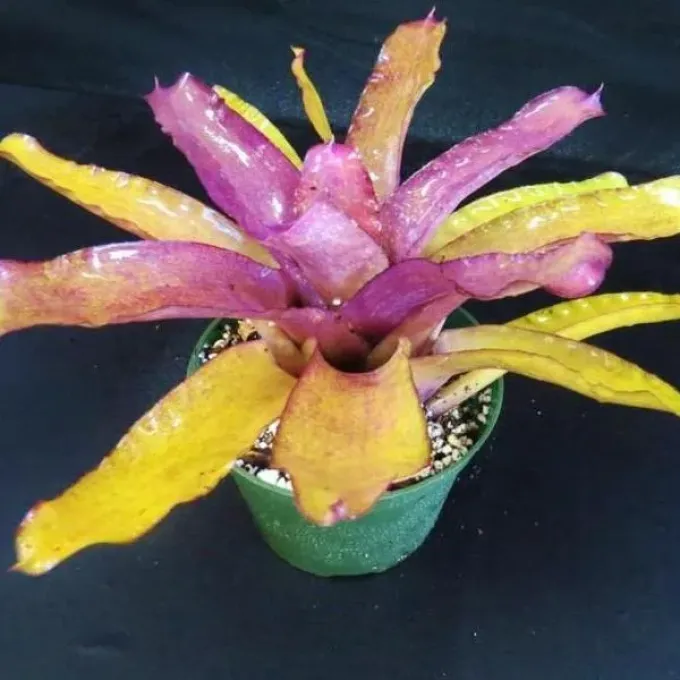
The plant is characterized by a compact, vase-shaped rosette of sturdy, leathery leaves. During its reproductive phase, the central leaves typically change color to vibrant red or purple, which is a distinctive morphological trait of this particular species.
Cultivation requires bright, indirect light to maintain leaf coloration and healthy growth. If the light intensity is too low, the foliage may lose its decorative hue and become elongated; if it is too high, the leaves are prone to scorching.
For optimal growth, the substrate must be highly porous and well-draining, similar to that used for orchids. A mixture consisting of pine bark, perlite, and peat moss is highly recommended to prevent waterlogging, which the root system cannot tolerate.
Environmental management involves keeping the ambient temperature between 20°C and 25°C. Watering should be done by filling the central tank with clean, room-temperature water, ensuring that it is periodically replaced to prevent stagnant conditions and microbial buildup.
Main diseases and pests
Neoregelia princeps is susceptible to several common greenhouse pests, including scale insects and mealybugs. These pests often congregate at the base of the leaves, drawing sap and weakening the overall vigor of the plant.
Pathogenic challenges include root and crown rot, which are primarily caused by poor air circulation or cold, water-saturated conditions. To mitigate these threats, it is essential to ensure a cycle of moisture and moderate drying of the growth medium, as well as maintaining adequate ventilation.