
Neoregelia carolinae and Neoregelia concentrica hybrids
Hybrids between Neoregelia carolinae and Neoregelia concentrica
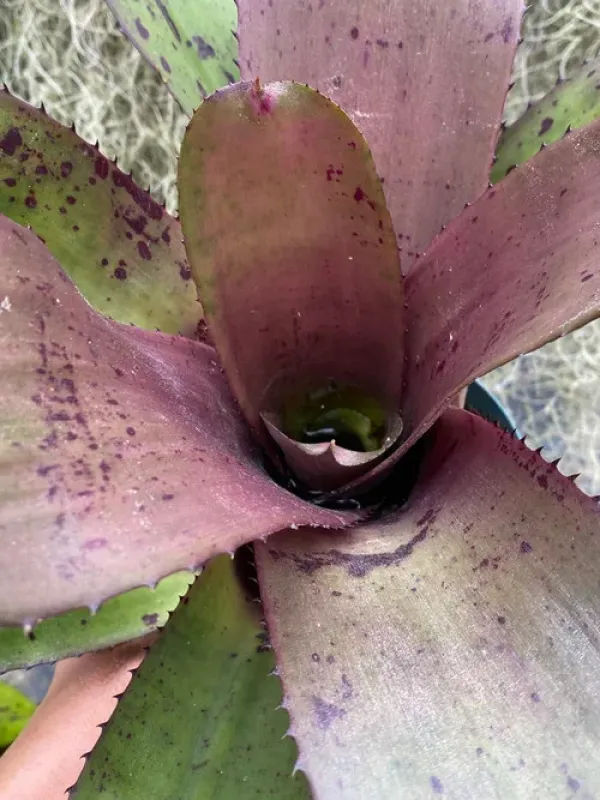
Description
Growing requirements
These hybrids belong to the Bromeliaceae family and represent a fusion of Neoregelia carolinae and Neoregelia concentrica traits. They are highly prized in ornamental horticulture for their vibrant foliage colors and unique rosette formations native to Brazilian rainforests.
Temperature management is critical for these plants, ideally ranging between 18 °C and 26 °C. Exposure to temperatures below 12 °C for an extended period can cause irreversible tissue damage and inhibit the development of the central inflorescence.
The substrate must be highly porous and well-draining, such as a mix of coco coir, pine bark, and perlite. Because these plants act as epiphytes in nature, they rely on their roots primarily for anchoring rather than nutrient uptake, requiring a lightweight medium.
Watering techniques involve keeping the central tank filled with fresh, low-mineral water. It is essential to flush the tank periodically to prevent the accumulation of salts or decaying organic matter that could attract pathogens.
Bright, indirect light is necessary for these hybrids to maintain their coloration. While they can tolerate some partial shade, insufficient light will cause the plants to lose their variegated patterns and result in weak, leggy growth.
Main diseases and pests
Common pests affecting these bromeliads include mealybugs and scale insects, which often hide deep within the leaf axils, making them difficult to detect early.
Spider mites frequently target these plants when the ambient humidity drops significantly, requiring increased misting or the use of humidifiers to deter them.
Fungal rots, specifically at the base of the rosette, occur when the plant is kept in waterlogged conditions with poor air circulation, causing rapid cell collapse.
Preventative measures involve maintaining a clean growing environment and ensuring that the water in the central tank is changed frequently to avoid bacterial growth.
If chemical intervention is required, it is best to use soaps or oils rather than harsh systemic pesticides, as bromeliads can be highly sensitive to certain chemical compounds.