
Neoregelia concentrica
Neoregelia concentrica (Vell.) L. B. Sm.
Description
Growing requirements
Neoregelia concentrica is a perennial herbaceous plant belonging to the Bromeliaceae family. Native to the tropical forests of Brazil, it is classified as an epiphyte, meaning it naturally grows on the surface of trees, drawing moisture and nutrients from the air and surrounding debris.
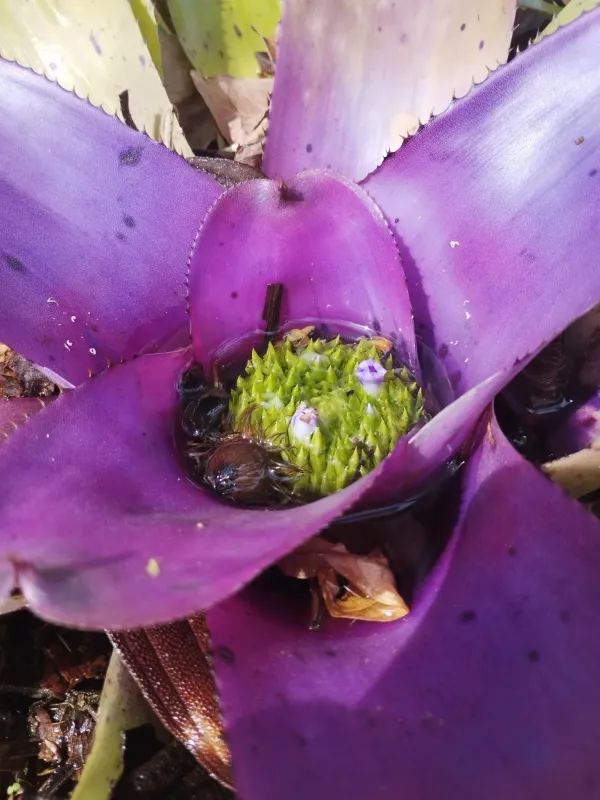
The plant is characterized by a robust rosette of thick, leathery, and often variegated leaves. The center of the rosette forms a tank, or phytotelma, which serves as a reservoir for water, playing a crucial role in the plant's survival and nutrient cycling in its wild habitat.
Climatic requirements for successful cultivation include a high relative humidity, ideally between 70% and 80%. In greenhouse environments, periodic misting is essential to maintain the turgor of the leaves and ensure proper development of the rosette structure.
Light requirements are moderate; the plant thrives in bright, indirect light. Excessive exposure to direct sunlight leads to leaf scorching, while insufficient light causes the foliage to lose its vibrant coloration and the rosette to become spindly and weak.
The substrate must be highly aerated and porous. A mixture of pine bark, perlite, sphagnum moss, and charcoal is recommended to mimic the tree bark environment. Proper drainage is vital, as the root system is sensitive to waterlogging and anaerobic conditions.
Main diseases and pests
Scale insects and mealybugs are the primary pests affecting Neoregelia concentrica. They typically congregate in the leaf axils and the deep parts of the central reservoir, making them difficult to detect and treat without specialized systemic insecticides.
Spider mites can become a significant issue in low-humidity environments. Their presence is indicated by the appearance of fine webbing and a mottled appearance on the leaves, leading to tissue necrosis if the infestation remains untreated.
Fungal rots, specifically at the base of the plant, are a direct result of improper cultivation practices. Overwatering the potting mix, especially when the temperature drops, leads to root decay and the eventual collapse of the plant's structural integrity.
Control measures involve maintaining high levels of hygiene in the greenhouse or growing area. Infected plants should be isolated immediately, and systemic pesticides should be applied according to the manufacturer's recommendations for ornamental plants.
Preventive maintenance includes ensuring good ventilation to prevent moisture stagnation and using water with a low mineral content to fill the central tank. Regularly flushing the tank with fresh, clean water helps prevent the buildup of bacteria and pathogens.