
Neoregelia hybrids
Hybrids between Neoregelia carolinae and Neoregelia macrosepala
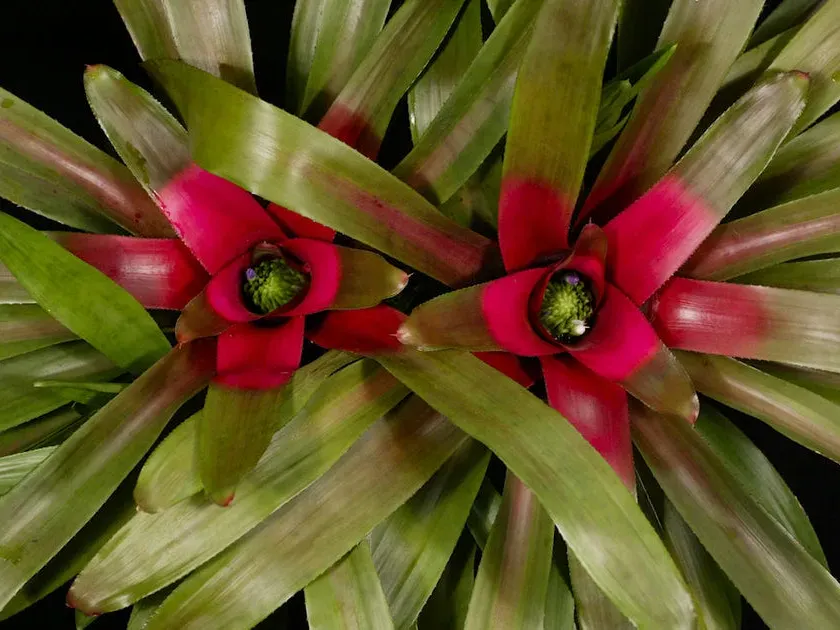
Description
Growing requirements
Neoregelia hybrids derived from Neoregelia carolinae and Neoregelia macrosepala are popular ornamental members of the Bromeliaceae family. These plants are prized for their colorful foliage and the unique architectural structure of their central rosette, which serves as a natural reservoir.
Originating from the tropical rainforests of South America, these plants thrive in high-humidity environments. For successful cultivation, it is essential to maintain ambient humidity levels above 60% and ensure temperatures stay between 20°C and 26°C throughout the growing season.
The choice of substrate is vital for healthy root development. These plants are epiphytic by nature, so they require an extremely well-draining medium, such as a mix of pine bark, perlite, and peat moss. This ensures that the roots are never waterlogged, which is the primary cause of root failure.
Light intensity plays a significant role in the plant's coloration. To maintain vibrant red or purple hues on the inner leaves, the plants require bright, indirect light. Placing them in too much shade will cause the plant to revert to a dull green color and lose its ornamental value.
Watering requirements are unique: the central cup should be kept filled with clean, soft water. It is essential to flush the cup periodically to prevent mineral buildup and bacterial growth. During the dormant winter period, the water level in the cup should be reduced to prevent rotting.
Main diseases and pests
Scale insects and mealybugs are the most common pests encountered in greenhouse or indoor production. Their presence is often identified by sticky residue or localized discoloration on the foliage. Mechanical removal combined with systemic insecticidal applications is the standard control protocol.
Bacterial soft rot, often caused by stagnant water trapped in the rosette in poor light conditions, is the most destructive disease. To minimize threats, ensure proper air circulation and avoid overhead watering in the evenings when temperatures drop, as this promotes fungal pathogen activity.