
Neltuma hassleri
Neltuma hassleri
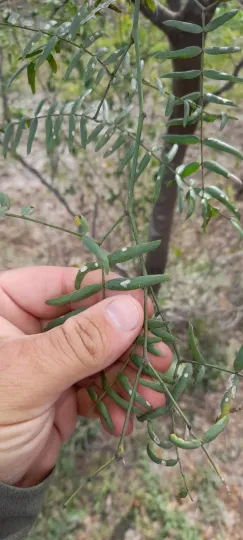
Description
Growing requirements
Neltuma hassleri belongs to the Fabaceae family and is known for its remarkable resilience in arid environments. Originally native to South America, this species has evolved to thrive in regions characterized by prolonged droughts and high temperatures.
The plant requires well-drained soils, ideally sandy or sandy-loam types. It exhibits a high tolerance for alkaline soil conditions and can effectively thrive in areas where other agricultural crops struggle due to soil salinity or poor nutrient content.
From a botanical perspective, the species features a deep taproot system, which serves as a vital mechanism for water absorption during dry seasons. This morphological adaptation makes it an excellent candidate for reforestation and land restoration projects.
Optimal growth conditions involve high solar radiation and stable temperatures ranging between 25 and 35 degrees Celsius. The species is highly sensitive to frost, which limits its range of cultivation to tropical and subtropical climate zones.
Cultural practices include proper spacing to ensure adequate light exposure for each individual plant. As a nitrogen-fixing legume, it naturally improves soil fertility, reducing the need for synthetic nitrogen fertilizers in production systems.
Yield
The primary agricultural utility of Neltuma hassleri lies in its biomass production. The pods are rich in proteins and carbohydrates, serving as a high-quality supplemental feed for ruminant livestock, especially during periods of pasture shortage.
The timber obtained from this species is highly valued for its density and natural resistance to decay. It is frequently utilized in rural infrastructure for building posts, fences, and high-quality charcoal production due to its high caloric value.
The species serves as an essential honey plant, supporting apiculture in dry regions. The nectar flow from these trees provides a steady source of forage for bees, resulting in premium quality honey with distinctive flavor profiles.
Yield levels depend heavily on plantation management and moisture availability during the establishment phase. Proper pruning and soil management can significantly increase the total biomass production over the lifetime of the stand.
Beyond direct products, the culture contributes to soil erosion control. By stabilizing topsoil and contributing to organic matter accumulation, Neltuma hassleri enhances the long-term productivity of the land, making it a cornerstone of sustainable agroforestry.