
Neltuma campestris
Neltuma campestris
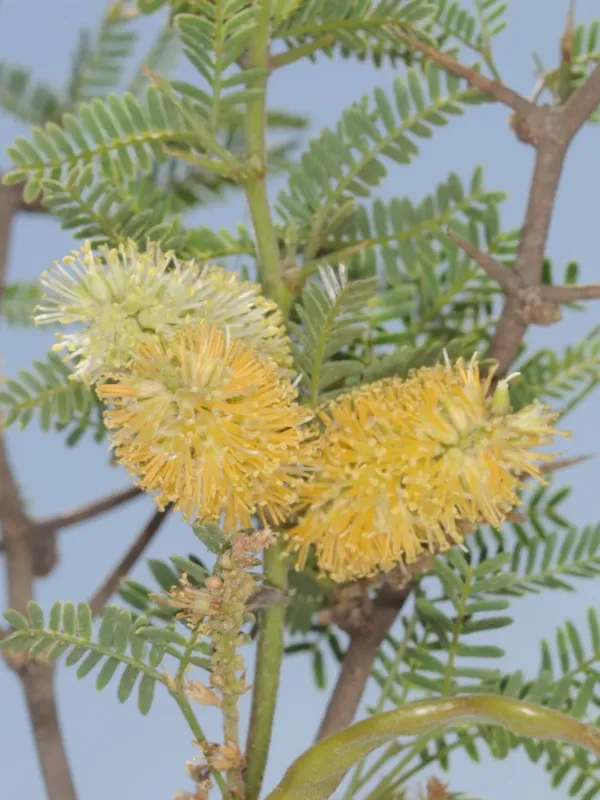
Description
Growing requirements
Neltuma campestris is a drought-tolerant, perennial leguminous plant native to South America, particularly common in arid and semi-arid regions. As a member of the Fabaceae family, it plays a vital role in local ecosystems by providing biomass and stabilizing dry soils through its extensive root system.
The crop is highly adapted to intense sunlight and thrives in environments where rainfall is scarce. It is considered an excellent candidate for agricultural diversification in drylands, as it requires very little supplemental irrigation once the plant is established.
Soil requirements for this species are minimal, as it can grow in a variety of substrates, including sandy and saline soils. A key biological advantage is its ability to fix atmospheric nitrogen, which helps improve the nutritional profile of degraded or poor-quality farmland.
Agronomic management of Neltuma campestris involves minimal intervention, focusing primarily on controlling weed competition in the early growth stages. Its structural robustness allows it to serve as a windbreak, protecting more sensitive crops from wind erosion and excessive heat.
Regarding its utility, the pods of the plant are highly valued as a protein-rich feed source for livestock. Furthermore, the tree is a significant honey plant, contributing to local biodiversity and supporting the health of agricultural landscapes in the regions where it is cultivated.
Main diseases and pests
The primary threats to Neltuma campestris populations involve specific insect pests, most notably seed-boring weevils that damage the developing pods. These pests can significantly reduce the viability of seeds if left unchecked, impacting both natural regeneration and harvesting yields.
Fungal infections, particularly root rot, can occur if the plants are exposed to prolonged waterlogged conditions. Such environment is inherently contrary to the plant's natural adaptation, making proper soil drainage a critical component of successful site management.
Young plants are susceptible to damage from small rodents that may feed on the bark during drought periods. Implementing protective measures or selecting site locations away from known rodent habitats can help mitigate this risk during the critical growth phase.
To prevent disease, farmers should ensure adequate spacing between plants to maintain proper air circulation within the canopy. This practice prevents the accumulation of excess humidity, which is a key factor in the proliferation of various pathogenic microorganisms.
Monitoring for signs of pest infestation during the flowering and fruit-setting stages is essential for effective crop protection. If an infestation is detected, integrated pest management strategies should be employed to preserve the crop's ecological benefits.