
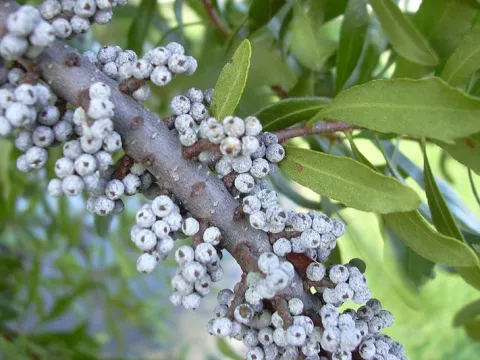
Wax myrtle
Morella
Wax myrtle (Morella) is a genus of evergreen or deciduous shrubs and small trees belonging to the Myricaceae family. These plants are notable for their ability to fix atmospheric nitrogen through a symbiotic relationship with actinomycetes, enabling them to thrive in nutrient-poor soils.
What the section contains


Wax myrtle
The plants generally require full sun to partial shade for optimal development. They are particularly well-suited to acidic, well-draining soils but demonstrate remarkable tolerance to various soil types, including sandy and saline coastal areas.
Climate requirements vary by species, but most prefer temperate regions. They are highly valued for their resilience against wind and salt spray, making them ideal for landscaping and soil stabilization projects.
Cultivation practices involve regular mulching to maintain soil moisture levels and suppress weed growth. Pruning is essential to manage the plant's shape and encourage dense, healthy foliage, especially when grown as a hedge.
Economically, Morella species are used for their edible berries, aromatic leaves, and the wax coating on their fruit, which has historically been harvested for candle making and culinary flavorings.
While generally hardy, wax myrtle can be susceptible to fungal leaf spots when grown in environments with poor air circulation or excessive humidity.
Pests such as scale insects and aphids may occasionally infest the plants, particularly during the active growth phases in late spring and summer.
Root rot is a significant risk in waterlogged soil conditions. Ensuring proper site drainage is the most effective preventative measure against such diseases.
Monitoring for signs of chlorosis is important, as the plant's iron uptake can be affected if the soil pH becomes too high for the specific species.
Integrated pest management strategies are recommended to maintain plant health while avoiding the overuse of synthetic chemicals on edible crops.
Harvesting wax myrtle berries must be done with care to avoid bruising the delicate fruit, which can lead to rapid decay post-harvest.
The ideal harvest time occurs when the berries have reached their full color maturity and possess a high sugar content for the best flavor profile.
Hand-picking is the standard harvesting method, ensuring that only ripe and unblemished berries are selected for further processing or fresh market sales.
Post-harvest handling requires immediate cooling and storage in ventilated containers to prolong the shelf life and preserve the distinct aromatic qualities.
Effective logistics are necessary to ensure that the produce reaches the consumer while maintaining its physical integrity and freshness.