
Mast Tree
Monoon longifolium
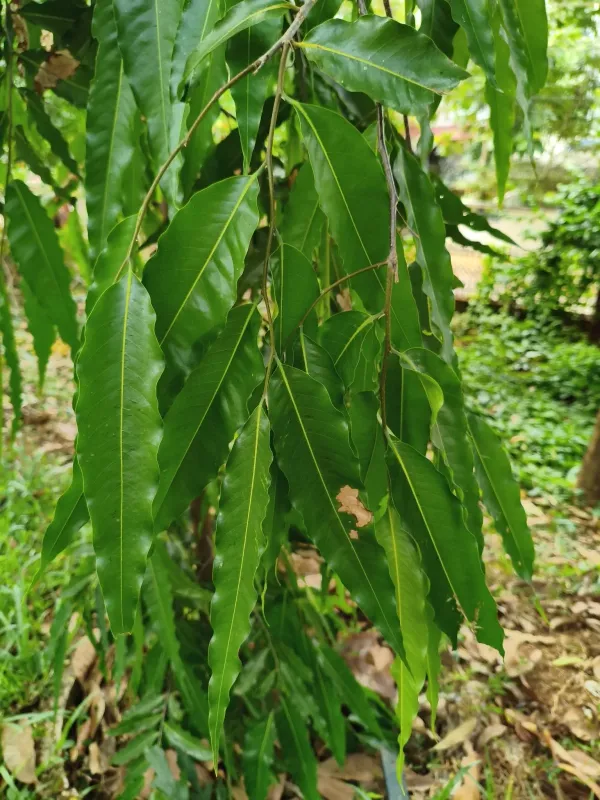
Description
Growing requirements
Monoon longifolium, commonly known as the Mast tree, is a member of the Annonaceae family. It is a majestic, tall, evergreen tree native to India and Sri Lanka, highly prized for its symmetrical, column-like growth habit.
The tree thrives in tropical and subtropical climates, requiring significant warmth to maintain its vigorous growth rate throughout the year. It does not tolerate frost and requires protection in cooler regions.
Regarding soil requirements, this species favors rich, well-draining loam. It is sensitive to waterlogged conditions, which can lead to root system decay; therefore, site selection with good natural drainage is essential.
The Mast tree is frequently utilized in landscaping to serve as a natural noise barrier and a privacy screen due to its dense, drooping foliage that provides year-round screening.
In terms of cultivation, minimal pruning is required to maintain its natural conical shape, making it an excellent low-maintenance ornamental species for warm-climate urban environments.
Main diseases and pests
The primary threats to Monoon longifolium include fungal leaf spot and root rot, which are often exacerbated by high humidity levels and poor soil ventilation.
Pest infestations typically involve scales and mites that cluster on the undersides of leaves, causing yellowing and premature leaf drop if left untreated.
Effective pest management involves the use of systemic insecticides or horticultural oils, applied consistently during the early stages of infestation to prevent population spikes.
Sanitation practices, such as removing fallen leaves and pruning dead branches, are critical in reducing the reservoir of pathogens within the canopy.
Maintaining a balanced nutrient profile through controlled fertilization helps the tree resist environmental stressors and reduces the overall susceptibility to secondary infections.