
Monoon fragrans
Monoon fragrans
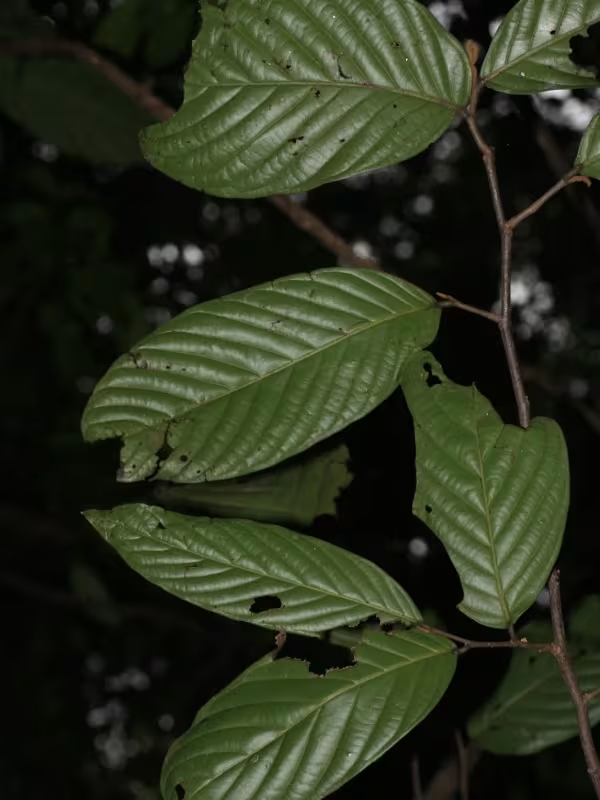
Description
Growing requirements
Monoon fragrans is a prominent member of the Annonaceae family, native to the tropical forests of South and Southeast Asia. This evergreen tree is widely recognized for its elegant, conical growth habit and fragrant flowers.
The cultivation of this species requires a tropical climate characterized by consistently high temperatures and significant humidity levels. It is highly sensitive to cold, making it unsuitable for regions prone to freezing temperatures.
Optimal growth is achieved in deep, fertile, and well-drained soils. Poor soil drainage poses a severe risk to the root system, often resulting in decay, so site selection and soil preparation are paramount for healthy development.
Light management is crucial, as young trees prefer partial shade to mimic their natural forest understory habitat, while mature trees can tolerate more direct sun exposure.
Beyond its ornamental value in landscaping, the plant has traditional uses, including the extraction of essential oils from its aromatic blossoms, which are valued in local perfumery.
Main diseases and pests
The primary threats to Monoon fragrans in a cultivation setting include soil-borne pathogens causing root rot, especially in poorly aerated or waterlogged conditions.
Insect pests, such as mealybugs and scale insects, frequently target the foliage and tender stems, causing yellowing and stunted growth if left unmanaged.
Fungal leaf spot diseases may appear during prolonged rainy seasons, necessitating the use of appropriate fungicides and proper canopy management to ensure air circulation.
Integrated pest management (IPM) practices are recommended to minimize chemical usage while maintaining tree health and vigor throughout the growing season.
Routine inspection of the leaves and stems is essential for early detection of infestations, allowing for timely mechanical or chemical intervention to prevent widespread damage.