
Miconia minutiflora
Miconia minutiflora
Description
Growing requirements
Miconia minutiflora belongs to the diverse Melastomataceae family, which is widely distributed across the tropical regions of the Americas. This species typically grows as a small tree or shrub, contributing significantly to the vertical structure of tropical forest ecosystems.
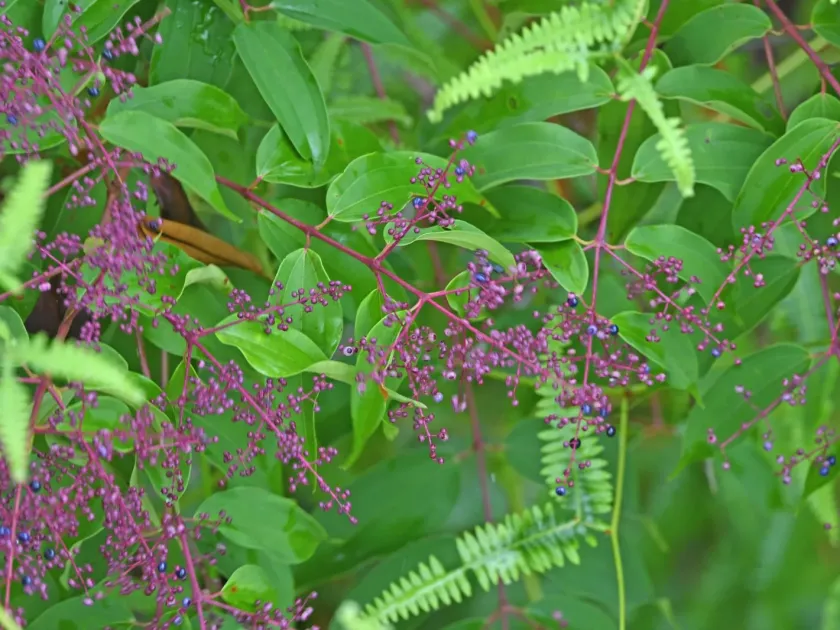
The botanical profile of the plant is defined by its opposite, often coriaceous leaves with prominent longitudinal venation. Small, numerous flowers are produced in panicles, which give the species its specific epithet and contribute to its identification in the wild.
The plant thrives in humid, tropical environments where rainfall is consistent throughout the year. It prefers well-draining, acidic soils rich in organic matter, often found in primary and secondary rainforests, where it can tolerate varying degrees of light exposure.
Ecologically, Miconia minutiflora acts as a pioneer species in forest regeneration, establishing itself quickly in gaps within the canopy. Its resilience in nutrient-poor forest soils allows it to maintain a stable population across its native range.
While not a major commercial crop, the species has potential in specialized horticulture and conservation forestry. Its aesthetic value and ecological adaptability make it a subject of interest for regional botanical research and sustainable forest management initiatives.