
Miconia lateriflora
Miconia lateriflora
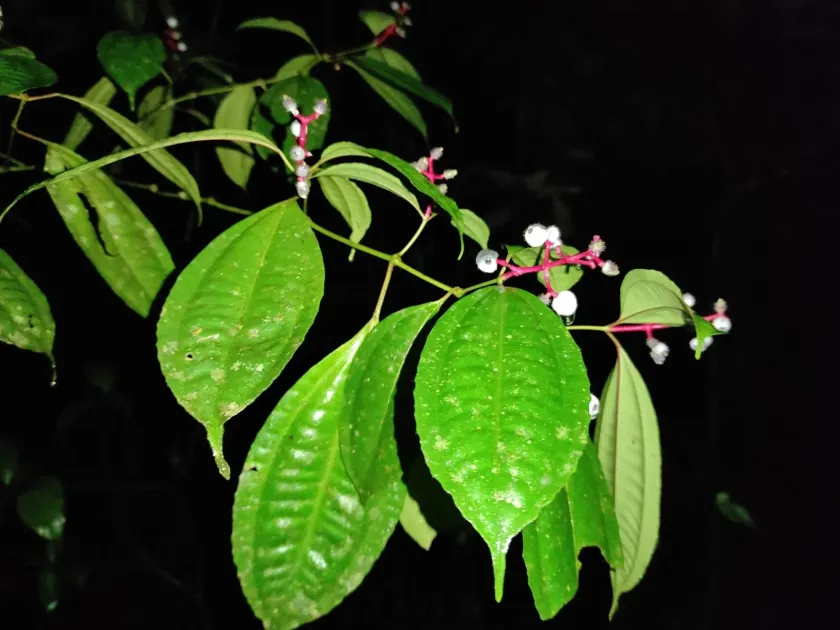
Description
Growing requirements
Miconia lateriflora belongs to the Melastomataceae family, a group of plants well-known for their unique leaf venation and diverse tropical growth forms. It is native to the humid forests of the Neotropics.
The plant requires a stable tropical environment to thrive. It performs best at temperatures ranging from 22°C to 28°C and should be protected from any exposure to cold drafts or freezing temperatures.
High relative humidity is essential for the healthy development of this species. In cultivation, it is recommended to maintain humidity levels above 70% to mimic the natural rainforest ecosystem from which it originates.
A well-draining, acidic, and organic-rich soil medium is ideal for Miconia lateriflora. The potting mix should allow for good oxygen exchange at the roots while retaining just enough moisture to prevent drying out.
Light intensity should be managed carefully. While it appreciates bright light, direct exposure to midday sun must be avoided to prevent foliar scorch. Filtered or indirect morning light is optimal for vigorous growth.
Main diseases and pests
Spider mites are the most common pest affecting Miconia lateriflora, particularly in indoor environments with low humidity. They congregate on the undersides of leaves, causing discoloration and eventual leaf drop.
Root rot, often caused by overwatering or poor drainage, is a significant threat to the plant's viability. If the soil remains saturated, the root system loses the ability to respire, leading to rapid decay.
Fungal leaf spot diseases can occur if there is insufficient airflow around the plant. Proper spacing and good ventilation are key strategies to prevent the buildup of spores that thrive in stagnant, humid conditions.
Mealybugs can also infest the stems and leaf axils, requiring careful inspection and prompt intervention using systemic insecticides or horticultural oils to manage the population effectively.
Integrated pest management, including regular monitoring and the use of natural predators or organic sprays, is the best approach for maintaining the health of Miconia lateriflora in a controlled environment.