
Miconia crenata
Miconia crenata
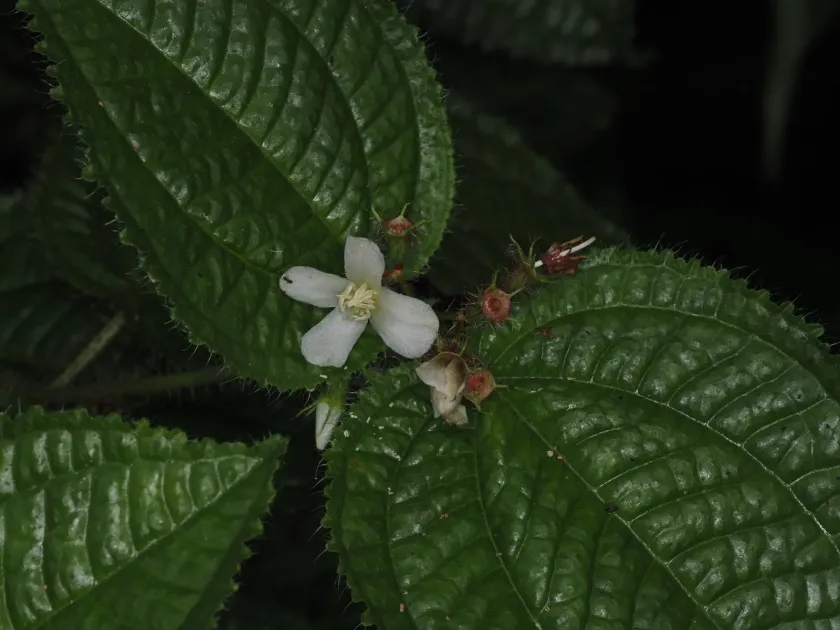
Description
Growing requirements
Miconia crenata is a shrubby plant belonging to the Melastomataceae family, native to tropical regions of South and Central America. It has gained notoriety worldwide due to its invasive potential in various tropical environments.
The plant features distinct leaves with prominent longitudinal veins and produces small, white, fragrant flowers in large panicles. Its fruits are dark, berry-like structures that are dispersed effectively by frugivorous birds.
It thrives in humid, warm climates, typically requiring temperatures between 20°C and 30°C and abundant rainfall throughout the year. It does not tolerate frost and prefers areas with consistent moisture levels.
The species is highly adaptable to various soil types, particularly favoring acidic, nutrient-rich, and well-drained soils. It shows great tolerance for shade, enabling it to invade established forest ecosystems and plantations.
From an agricultural standpoint, it has no conventional commercial value and is categorized as a major invasive threat. Therefore, agricultural management is exclusively focused on containment and eradication protocols.
Main diseases and pests
The primary threat posed by Miconia crenata is its ability to displace native vegetation and agricultural crops. It creates thick, mono-specific stands that deplete soil resources and shade out other species.
Pests and pathogens within its native range help limit its spread, but in its introduced range, there is a lack of natural enemies, which contributes to its uncontrolled expansion into farmland.
While some fungal infections affecting leaves and roots occur, they are generally ineffective at curbing the growth of established populations, necessitating human intervention to prevent agricultural damage.
Integrated weed management, including mechanical removal of seedlings and the strategic application of systemic herbicides, is the standard approach for controlling infestations in vulnerable ecosystems.
Preventative measures, such as monitoring bird activity and nursery stock inspection, are critical to ensure that Miconia crenata does not become established in new, unaffected agricultural or forest zones.