
Miconia laevigata
Miconia laevigata
Description
Growing requirements
Miconia laevigata is an evergreen shrub or small tree belonging to the Melastomataceae family, native to the tropical landscapes of Central and South America. It is typically found in humid forests and disturbed areas where it acts as a pioneer species.
The plant thrives in warm, humid tropical environments and requires temperatures consistently above 20 degrees Celsius. In cultivation, it is essential to mimic these conditions, making it suitable for greenhouses or tropical garden settings where frost risk is non-existent.
Regarding soil requirements, the species prefers well-drained, nutrient-rich substrates with a slightly acidic pH. Proper drainage is crucial, as the roots are highly susceptible to rot if left in waterlogged conditions, even though the plant enjoys moderate moisture.
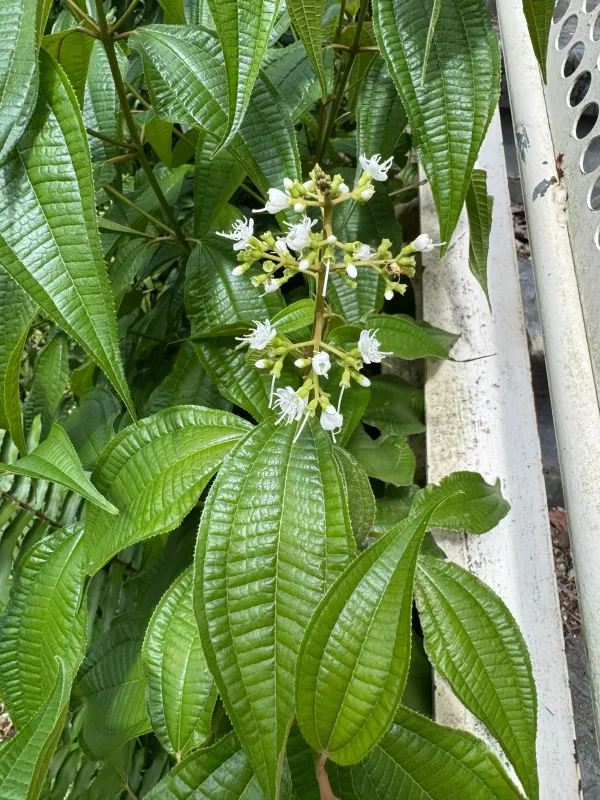
Morphologically, Miconia laevigata is characterized by opposite, entire leaves with distinct longitudinal veins, typical for the family. The small, often white flowers are produced in large panicles, resulting in berries that are vital for local biodiversity by providing food for fauna.
Agricultural practices include routine pruning to manage the size and density of the canopy, especially when used for landscape purposes. While it is not a traditional staple crop, its rapid growth rate makes it valuable in ecological restoration projects within its natural range.
Main diseases and pests
Fungal pathogens are the primary threat, particularly leaf spot diseases that proliferate in stagnant, humid air. Maintaining airflow through proper spacing is the most effective cultural method to mitigate these outbreaks in nursery or greenhouse conditions.
Scale insects and spider mites are frequent pests that can severely weaken the plant. Regular monitoring of the leaf undersides, combined with the application of horticultural oils or soap sprays, is recommended to manage populations before they cause structural damage.
Root rot, typically caused by Phytophthora or Pythium species, often occurs when the soil structure is too heavy or drainage is inadequate. This condition is frequently irreversible, emphasizing the need for preventative measures such as using sterile growing media.
Invasive weed competition can stunt the early growth stages of Miconia laevigata if it is being used for reforestation. Maintaining a weed-free zone around the base of the young plants is essential for ensuring successful establishment in the field.
Nutrient deficiencies, particularly iron chlorosis, can occur in alkaline soils, leading to yellowing between leaf veins. Using chelated micronutrients in the fertilization regimen can correct this issue and restore the plant's natural deep green foliage color.