
Metrosideros operculata
Metrosideros operculata
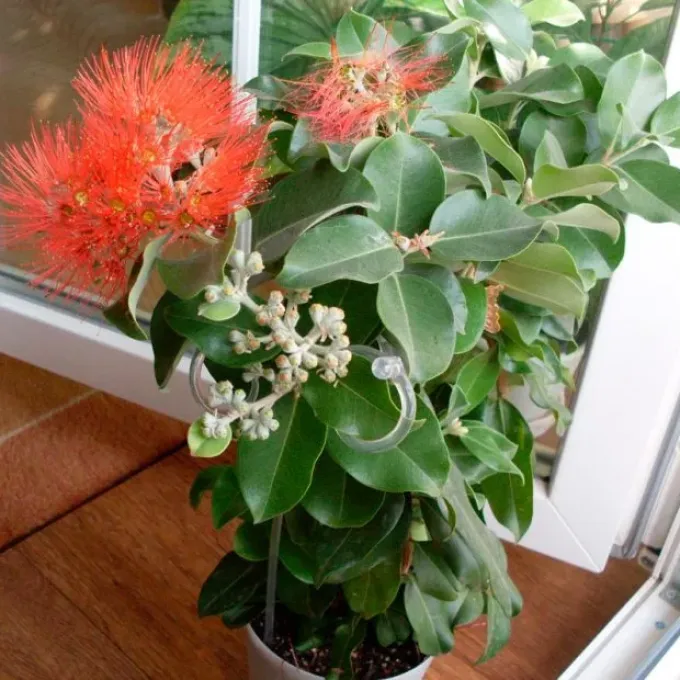
Description
Growing requirements
Metrosideros operculata is a botanical species belonging to the Myrtaceae family, native to the diverse landscapes of New Caledonia. This evergreen shrub or small tree is prized for its structural beauty and dense, leathery foliage.
The culture thrives in environments that mimic its natural tropical habitat. It requires high atmospheric humidity and a location sheltered from extreme temperature fluctuations to maintain optimal metabolic activity and leaf health.
Soil composition is critical for this species. It demands a well-draining, slightly acidic medium rich in organic matter. A mixture consisting of peat, sand, and bark is often recommended to prevent root asphyxiation caused by waterlogging.
Irrigation practices must be calibrated to the specific growth stage of the plant. During the active growing season, consistent moisture is necessary, whereas dormant periods require a significant reduction in watering to prevent rot.
Sunlight exposure should be managed carefully. While the species enjoys light, direct and intense solar radiation can damage the foliage. Providing filtered or partial shade ensures the leaves maintain their deep, healthy green coloration.
Main diseases and pests
The primary threats to Metrosideros operculata are fungal pathogens, particularly Phytophthora, which target the root system in damp and stagnant soil conditions. Preventive soil management is the best defense against these pathogens.
Mealybugs are a common pest issue for this plant, often found in the leaf axils. These pests secrete a waxy substance that attracts secondary fungal infections, requiring prompt mechanical removal and chemical control.
Spider mites represent a significant risk, especially in low-humidity environments. These arachnids colonize the underside of leaves, causing stippling and yellowing, which eventually leads to premature defoliation if left untreated.
Scale insects can attach to the stems and branches, draining the plant's resources. Regular inspections are necessary to detect these pests early before they spread across the entire canopy of the tree.
Nutrient deficiencies, specifically in iron and manganese, can lead to chlorosis. Maintaining the correct pH levels in the soil is essential to ensure the plant can effectively uptake these vital micronutrients for photosynthesis.