
Metrosideros angustifolia
Metrosideros angustifolia
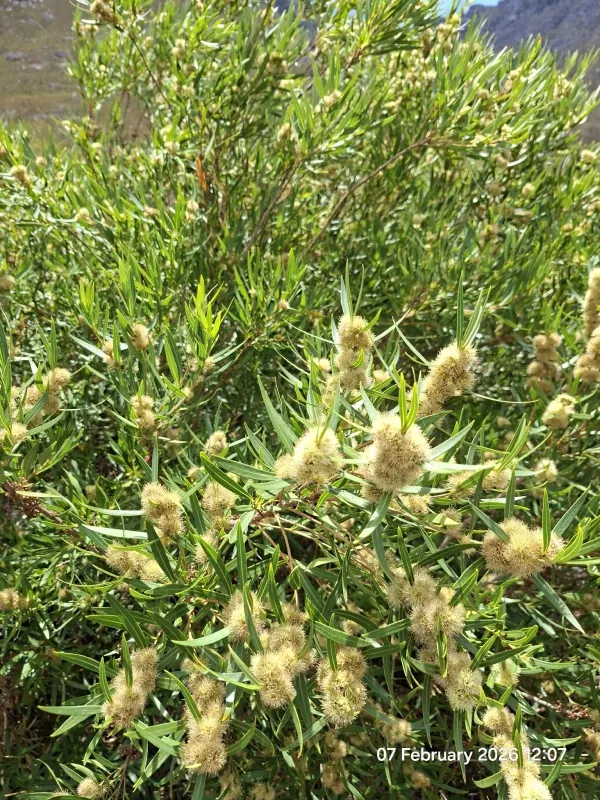
Description
Growing requirements
Metrosideros angustifolia is a distinct evergreen shrub or small tree belonging to the Myrtaceae family. It is widely recognized for its narrow, lanceolate leaves, which provide a refined texture to any garden setting or botanical collection.
Native to the Cape region of South Africa, this plant has adapted to riparian habitats. In its natural environment, it typically thrives along riverbanks, which indicates its strong preference for consistent moisture levels in the soil.
When cultivated, Metrosideros angustifolia requires a sunny location to reach its full potential. While it can tolerate partial shade, maximum growth and leaf density are achieved when the plant is exposed to several hours of direct sunlight daily.
The soil requirements are specific: the medium must be fertile, well-draining, and moisture-retentive. Gardeners often use organic-rich loam or specialized potting mixes designed for moisture-loving shrubs to ensure healthy development.
Regarding climate, this species is frost-tender and prefers mild, temperate to subtropical conditions. In colder regions, it is essential to cultivate the plant in containers, allowing for easy relocation to a greenhouse or conservatory during winter months.
Main diseases and pests
The most common pest affecting Metrosideros angustifolia is the spider mite, which thrives in warm, dry environments. Regular misting and maintaining appropriate humidity levels are effective preventive measures.
Root rot is a significant risk, particularly when soil drainage is compromised. To mitigate this threat, growers must ensure that pots have adequate drainage holes and that water does not pool in the tray.
Mealybugs are another potential threat, often found clustering in leaf axils or on tender new growth. Manual removal or the application of insecticidal soap is recommended at the first sign of infestation.
Fungal leaf spots can occur if the foliage remains wet for extended periods in environments with poor air circulation. Proper spacing between plants is crucial for maintaining foliage health.
Nutrient deficiencies, specifically iron or magnesium, can result in leaf yellowing. Applying a balanced liquid fertilizer throughout the growing season helps sustain plant vigor and prevents chlorotic symptoms.