
Thick-leaved melicytus
Melicytus crassifolius
Description
Growing requirements
Melicytus crassifolius, commonly known as the thick-leaved melicytus, is a hardy evergreen shrub belonging to the Violaceae family. Native to New Zealand, it is highly valued for its ability to thrive in harsh, coastal environments where other species struggle.
The plant grows best in well-drained, sandy or rocky soils. It is remarkably tolerant of saline air, making it an ideal choice for seaside gardens or landscapes exposed to strong, salt-laden winds, which is a major advantage for coastal agricultural or landscaping projects.
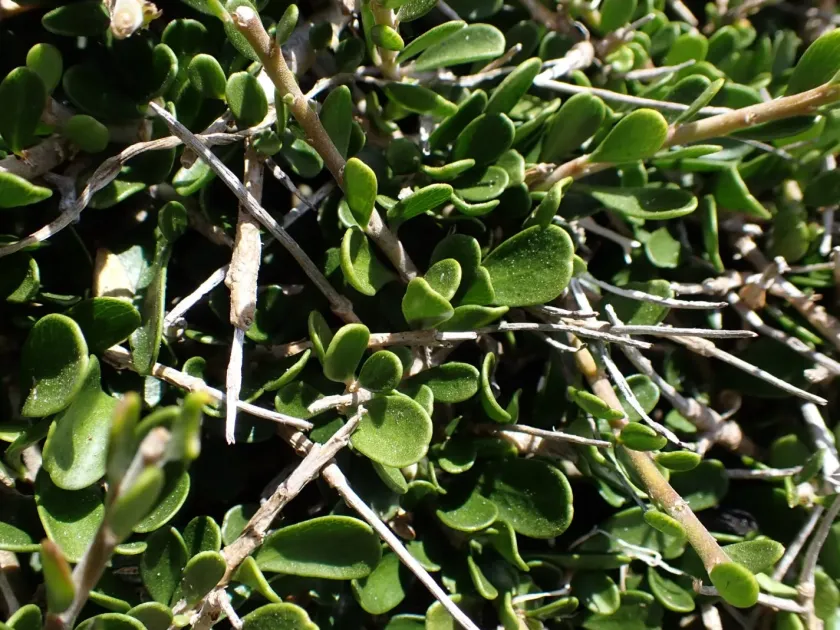
Botanically, it presents as a dense, divaricating shrub with tough, leathery leaves and a distinct branching habit. It produces small, subtle flowers followed by berries that serve as a source of food for native birds, contributing to local biodiversity.
Regarding climatic requirements, this species favors full sun and temperate conditions. While it is quite drought-tolerant once established, it prefers a site with excellent drainage to prevent root rot, which is the most significant physiological stress for the plant.
Agrotechnical practices are straightforward: minimal pruning is needed to maintain its naturally sculptural shape. It is a slow-growing species, so site selection is crucial to ensure it reaches its full decorative potential without needing constant maintenance or irrigation interventions.
Main diseases and pests
Root rot is the primary threat to the thick-leaved melicytus. This condition is almost always a result of poor drainage or overwatering. Maintaining a porous soil structure is the best prophylactic measure against these soil-borne pathogens.
Scale insects can occasionally infest the stems, especially in plants that are stressed by overcrowding or inadequate light. Periodic inspection is recommended to identify early signs of infestation and address them before they spread.
Fungal leaf spot may develop if air circulation is poor, particularly in humid, non-coastal environments. Ensuring the plant is not crowded by other shrubs will improve airflow and reduce humidity levels around the foliage.
Pest management should focus on non-invasive methods, such as manual removal of insects or the use of horticultural oils, to preserve the health of the plant and surrounding ecosystem. Chemical treatments should be used only as a last resort.
Strategic pruning of diseased or dead wood is essential to keep the shrub in good health. By preventing the accumulation of plant debris under the canopy, the grower eliminates potential niches for fungal growth and insect breeding.