
Melicytus alpinus
Melicytus alpinus
Description
Growing requirements
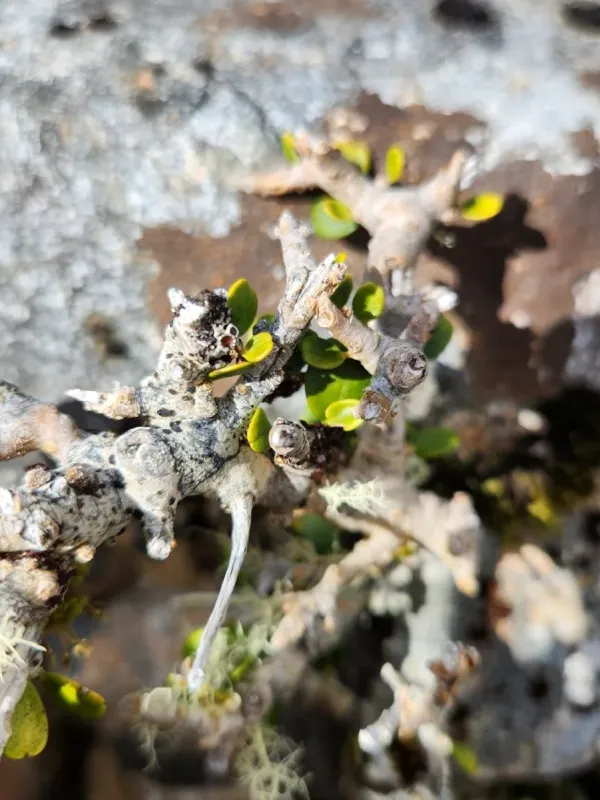
Melicytus alpinus, commonly known as the porcupine shrub, belongs to the Violaceae family. It is a resilient, evergreen shrub native to the high-altitude landscapes of New Zealand.
The plant is botanically characterized by a dense, tangled, and divaricating growth habit. Its stiff, interlaced branches form a cushion-like shape, providing excellent resistance against harsh alpine winds.
Regarding soil requirements, this species demands exceptionally well-drained, gritty, or rocky soil conditions. It thrives in low-fertility substrates and is highly intolerant of waterlogged roots, which often lead to decline.
Melicytus alpinus prefers full sun exposure to maintain its compact habit and vibrant foliage. It is highly valued in horticulture for its adaptability to cold climates, making it suitable for rock gardens and modern xeriscapes.
In terms of economic and practical use, the shrub is widely utilized in landscaping for its architectural form. Its small, translucent, berry-like fruits provide an added layer of visual interest during the late autumn and early winter.
Main diseases and pests
The primary threat to the health of Melicytus alpinus is root rot caused by poor soil drainage. Maintaining a dry root zone during dormant periods is essential for the long-term survival of the shrub.
Slugs and snails can present a significant nuisance during the spring season. These pests feed on the tender tips of the branches, potentially affecting the plant's overall shape if left untreated.
Aphids occasionally colonize the soft growth of the plant, especially in sheltered spots with limited air circulation. Monitoring and manual removal are usually sufficient for control in a garden environment.
Fungal diseases like leaf spot may appear if the plant is crowded by other vegetation. Ensuring adequate spacing between plants significantly reduces the risk of moisture-related fungal issues.
Regular maintenance, including the removal of dead or crossing branches, helps sustain the plant’s health. By providing optimal drainage and sufficient light, the need for chemical intervention remains minimal.