
Roseleaf bramble
Rubus rosifolius Sm.
Description
Growing requirements
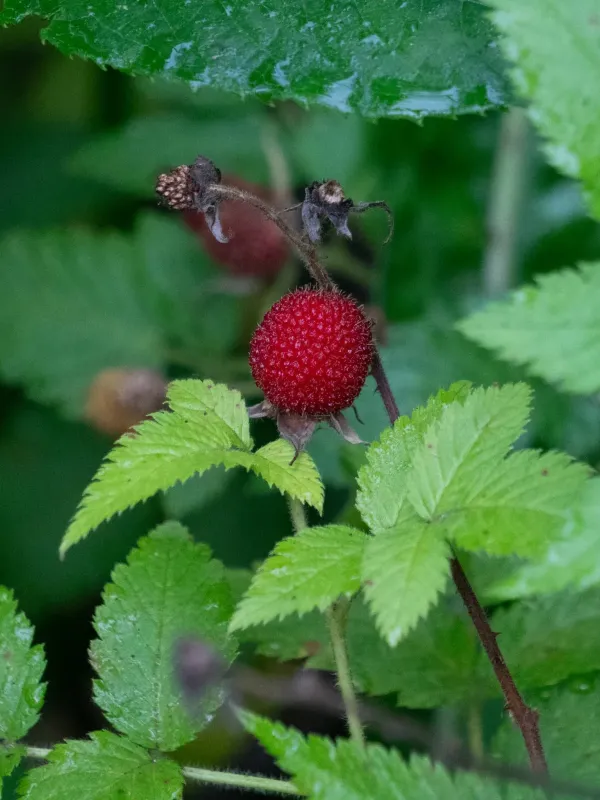
The roseleaf bramble (Rubus rosifolius) is a perennial subshrub belonging to the Rosaceae family. Native to tropical and subtropical regions of East Asia and Australia, it is known for its delicate, pinnate leaves that closely resemble those of a garden rose, providing an ornamental aesthetic alongside its fruit production.
This species requires a mild and humid climate to thrive. It is not frost-tolerant, which makes it suitable for indoor cultivation, greenhouses, or conservatory environments in temperate zones. Consistent warmth, ranging between 18 and 25 degrees Celsius, is crucial for promoting vigorous vegetative growth throughout the season.
Regarding soil conditions, the plant demands fertile, well-draining soil with a neutral to slightly acidic pH. Proper drainage is the most critical factor, as stagnant water around the roots can lead to immediate decline and root rot. Utilizing a lightweight, nutrient-rich potting mix is recommended for container-grown specimens.
The agrotechnical management involves regular irrigation to keep the substrate moist but not waterlogged. During the peak growth and flowering phases, applying a balanced liquid fertilizer can significantly increase fruit yield. Mulching is also beneficial to regulate soil temperature and retain moisture in the root zone.
In terms of usage, the fruits of Rubus rosifolius are highly valued for their sweet flavor and are used fresh in salads, as well as in jellies, preserves, and desserts. Beyond its culinary utility, the plant is widely appreciated in landscaping and indoor design for its elegant foliage and vibrant, bright red berries.
Main diseases and pests
Common plant diseases affecting this culture include fungal infections such as root rot and anthracnose, which are frequently triggered by high humidity levels and poor airflow. Managing the environment through proper ventilation and periodic pruning of dense foliage can significantly mitigate these risks.
Pest management focuses primarily on controlling spider mites and aphids, which tend to infest the soft stems and the underside of leaves, especially in protected environments. Implementing a scouting program and utilizing environmentally friendly insecticidal soaps or biological controls can effectively keep pest populations under control.