
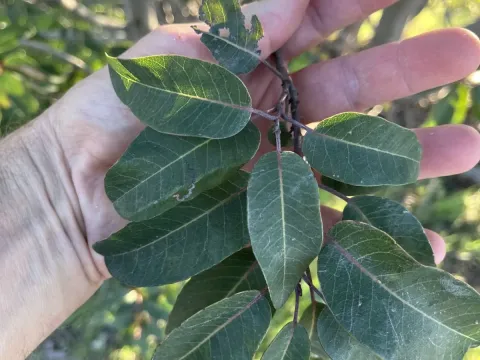
Laurel sumac
Malosma
Laurel sumac (Malosma laurina) is an evergreen shrub belonging to the Anacardiaceae family. It is native to the coastal sage scrub communities of Southern California and Baja California.
What the section contains

Laurel sumac
This species is well-known for its adaptation to Mediterranean climates, characterized by hot, dry summers and mild, wet winters. It serves as a vital component of local ecosystems.
The plant thrives in rocky or sandy soils with excellent drainage. It is highly sensitive to soil compaction and waterlogging, which can be detrimental to its root system development.
Botanically, it features leathery, folded, laurel-like leaves with reddish margins. It produces small, creamy white flowers in large panicles, making it an excellent source of nectar for pollinators.
In landscaping and erosion control, Malosma laurina is highly valued for its fire resistance and its ability to stabilize slopes in arid environments without requiring frequent irrigation.
The primary threats include root rot pathogens, specifically when the plant is grown in heavy clay soils or over-watered. Proper drainage management is critical for survival.
Pest issues are generally minimal, although the shrub can occasionally host local scale insects or leaf-mining beetles. Integrated pest management should focus on maintaining overall plant vigor.