
Laurel sumac
Malosma laurina
Description
Growing requirements
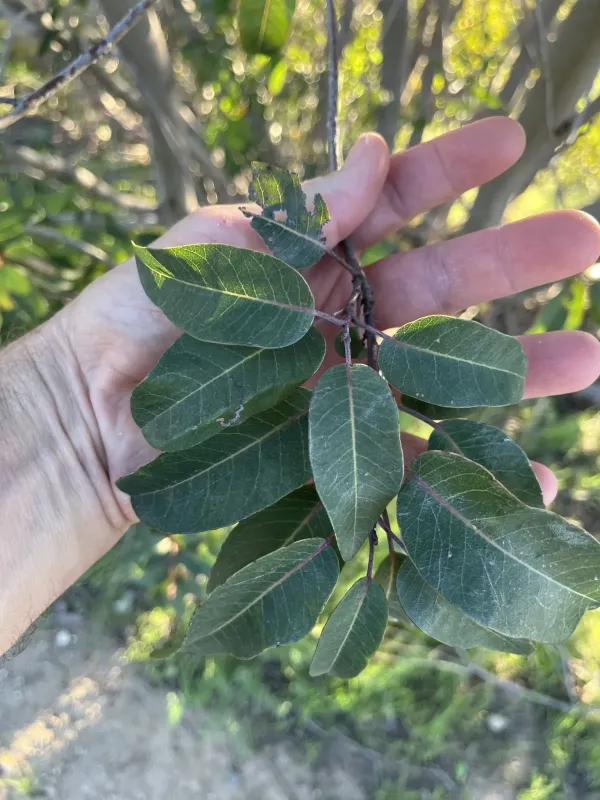
Laurel sumac (Malosma laurina) is an evergreen, broad-leaved shrub belonging to the Anacardiaceae family. Native to the coastal sage scrub and chaparral ecosystems of California and Mexico, it is highly valued for its leathery, aromatic leaves and distinct architectural form.
The plant thrives in well-drained, sunny locations. It has adapted to survive in environments with poor soil fertility and limited rainfall. Its root system is deep and expansive, which allows it to access water reserves that are unavailable to many other smaller plant species in the same habitat.
Climatic requirements are specific to Mediterranean-type climates, characterized by wet winters and long, dry summers. The species is frost-sensitive; temperatures dropping consistently below freezing can cause significant damage to the canopy and potentially kill young, established specimens.
Agronomic management of Laurel sumac is relatively straightforward. Once established, the shrub requires little to no supplemental irrigation. Periodic pruning is recommended only if a specific shape is desired or to remove dead branches, as the plant naturally maintains a dense, rounded form.
In terms of usage, Laurel sumac is a key component in ecological restoration projects due to its role in soil stabilization and fire-resistant landscaping. In residential garden settings, it provides year-round green foliage and acts as an excellent screen or hedge, supporting local pollinator populations.
Main diseases and pests
The most significant threat to the health of Malosma laurina is poor soil drainage. When planted in heavy clay soils or areas where water pools, the roots are highly susceptible to phytophthora and other pathogens that lead to sudden decline.
While the plant is generally robust, it can be occasionally affected by scale insects and aphids. Proper spacing between plants is essential to ensure adequate air circulation, which reduces the incidence of fungal issues and helps maintain the overall vigor of the shrub.