
Maireana villosa
Maireana villosa
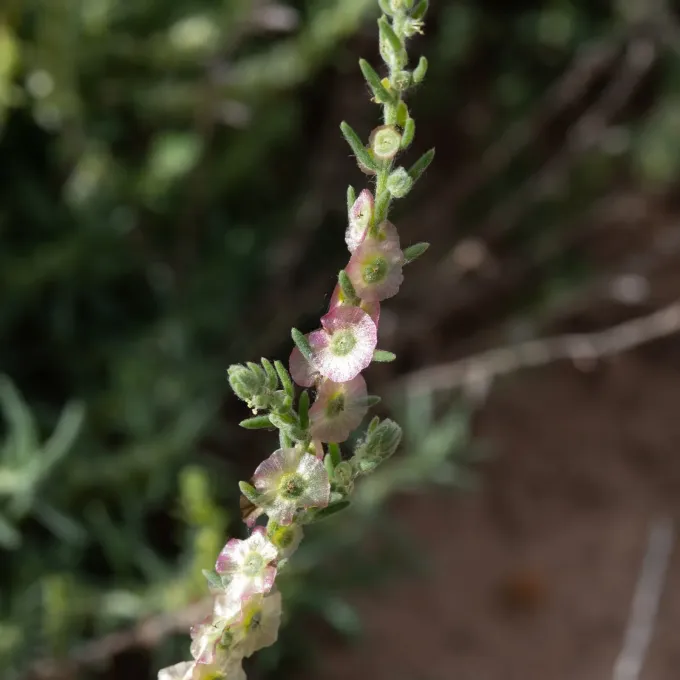
Description
Growing requirements
Maireana villosa, commonly known as a type of cotton-bush or bluebush, is a perennial subshrub belonging to the Amaranthaceae family. It is native to the arid and semi-arid regions of Australia, where it serves as a critical component of the native vegetation ecosystem.
The plant is biologically characterized by its dense covering of fine, white, silky hairs, which provide an effective mechanism for reflecting sunlight and reducing leaf temperature. This adaptation allows the plant to maintain physiological processes under high-temperature stress.
Regarding soil requirements, Maireana villosa prefers well-drained, alkaline, and saline-affected soils. Its ability to extract moisture from deep soil layers makes it highly resilient to extended drought periods, provided the root zone remains free of waterlogging.
Agronomic management of this species focuses on grazing rotation. As a forage crop, it is valued for its nutritional profile and its ability to withstand the harsh conditions of the Australian outback where standard grasses fail to thrive.
Ecologically, the cultivation of this species is essential for preventing soil erosion. Its sprawling growth habit helps stabilize the topsoil, acting as a natural barrier against wind erosion in degraded agricultural landscapes.
Main diseases and pests
Overgrazing remains the primary threat to the sustainability of Maireana villosa stands. Intense grazing pressure prevents the plant from setting seed and accumulating sufficient energy reserves for survival.
Pests such as various locust species and certain coleopterans can cause significant defoliation during peak growth seasons, directly impacting the availability of forage for livestock.
Disease outbreaks are rare in well-managed native stands; however, improper water management leading to humidity buildup may encourage fungal infections around the base of the stem.
Competition from aggressive introduced grasses often forces the species out of its native habitat, requiring careful monitoring to ensure that the stand density remains viable for agricultural use.
Severe environmental shifts, such as prolonged floods or unseasonable frosts, can disrupt the plant's natural dormancy and make it susceptible to opportunistic pathogens, ultimately leading to dieback.