
Maireana brevifolia
Maireana brevifolia
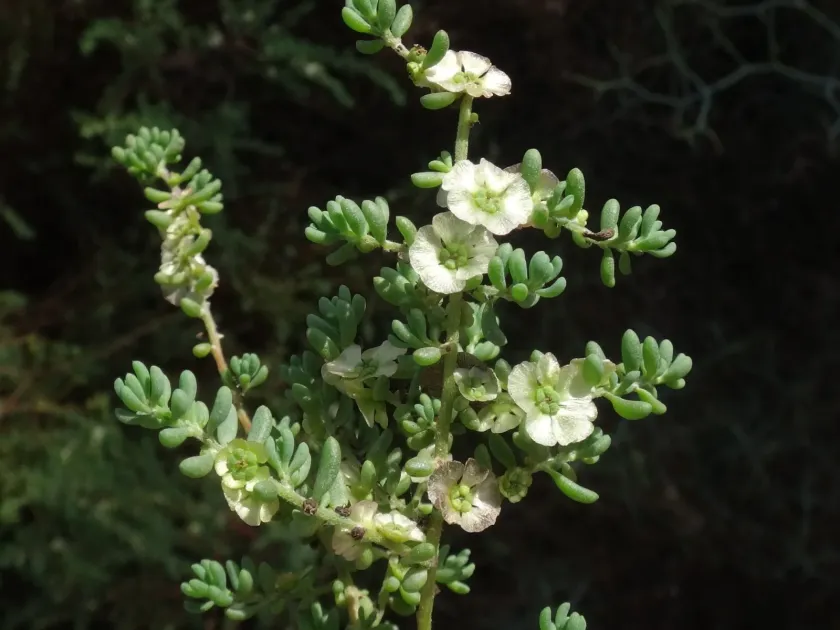
Description
Sowing dates
Sowing of Maireana brevifolia is typically performed during the autumn-winter period or early spring when soil moisture is optimal for germination.
Direct seeding methods onto prepared soil require minimal surface tillage to maintain soil structure and promote successful seedling establishment.
It is crucial to note that the small seeds should not be buried too deep, as shallow placement is essential for ensuring high germination rates.
For large-scale establishment of grazing lands, disc seeders are often used to place seeds precisely in rows, minimizing competition with invasive weeds.
Planting density depends on the management goals: intensive grazing systems require higher density, while land restoration projects favor dispersed patterns.
Growing requirements
Maireana brevifolia is a notable halophyte belonging to the Amaranthaceae family, highly adapted to the extreme conditions of saline semi-deserts.
The culture exhibits exceptional drought tolerance and is capable of surviving in regions with very low annual rainfall while maintaining green foliage.
It thrives in sandy or loamy soils and handles high pH and salinity levels well, making it a valuable plant for rehabilitating degraded, saline areas.
Optimal growth requires intense sunlight, as the plant is highly sensitive to shading and competition from more aggressive local plant species.
Temperature tolerance is broad, allowing the shrub to withstand significant diurnal temperature variations common in arid climates.
Yield
The biomass yield of Maireana brevifolia varies depending on soil fertility and seasonal rainfall, yet it provides reliable forage when other plants fail.
Under controlled grazing management, productivity can reach up to 3 tons of dry matter per hectare, which is significant for arid rangeland zones.
The primary value of this culture lies not just in biomass quantity, but in its nutritional quality and ability to remain palatable throughout the summer.
Systematic grazing requires a rotational system to allow the plants to replenish their internal energy stores after being utilized by livestock.
Continuous overgrazing leads to plantation depletion; therefore, regular biomass monitoring is essential for sustainable land management practices.
Main diseases and pests
The primary threats to Maireana plantations are locust outbreaks, which can destroy large areas of young growth in a very short amount of time.
Fungal diseases of the root system pose a critical risk, especially during periods of excessive soil moisture caused by uncharacteristic heavy rainfall.
Rodent damage is a common issue, as gnawed bark and stems often serve as entry points for secondary infections that weaken the shrub's immunity.
High grazing pressure in the early stages of plant development can result in total plantation loss due to trampling and mechanical breakage.
Encroachment by aggressive invasive weeds can suppress Maireana growth, necessitating regular mechanical or chemical control to maintain density.
Harvesting
Harvesting Maireana brevifolia in the traditional sense is rarely practiced; its primary agricultural use is direct grazing by livestock in the field.
In cases where fodder storage is required, mechanical harvesting of the upper shoots is possible, which can actually stimulate bushiness and regrowth.
It is vital to leave at least 15-20 centimeters of stem above the ground level to ensure the plant can regenerate efficiently after cutting.
The most beneficial grazing window is during dry periods when nutritional value in traditional pasture grasses declines significantly.
Seed collection is performed manually or with specialized machinery in late summer, once the fruits have reached full physiological maturity.