
Maireana pyramidata
Maireana pyramidata
Description
Growing requirements
Maireana pyramidata, commonly known as Sago Bush or shrubby saltbush, belongs to the Amaranthaceae family. It is a hardy, perennial shrub native to the arid and semi-arid regions of Australia, specifically adapted to survive in harsh environmental conditions.
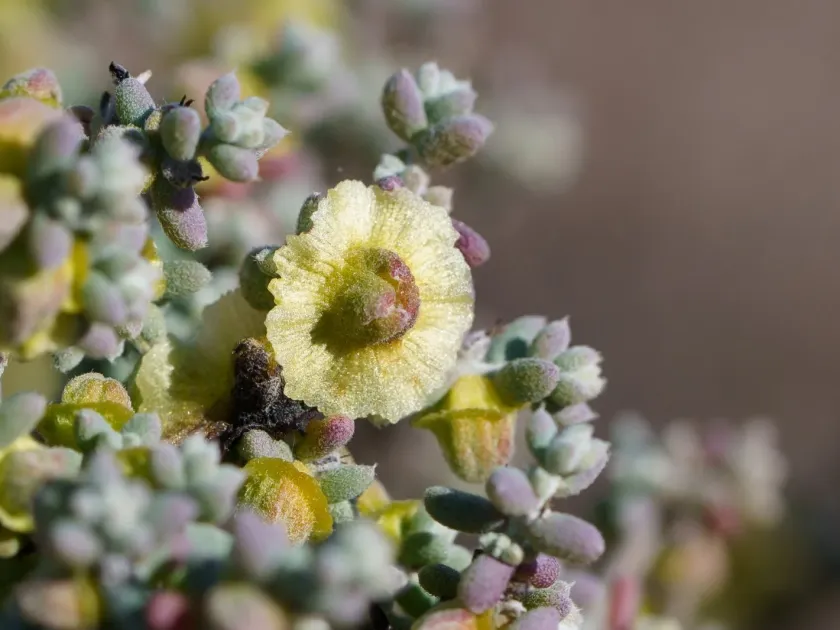
The plant is characterized by a distinctive pyramidal growth habit, which allows it to withstand high winds. Its leaves are succulent and often coated with small hairs, an evolutionary adaptation to reduce water loss through transpiration in extreme heat.
It thrives in a variety of soil types, including heavy clays and saline soils. It is classified as a halophyte, meaning it can tolerate and even thrive in soils with high concentrations of salts that would be toxic to most conventional agricultural crops.
Climate requirements include high temperatures and low annual rainfall. It is exceptionally drought-tolerant and can remain dormant during prolonged dry spells, resuming growth rapidly once moisture becomes available.
The agronomic management of this species involves minimal inputs. Because it is a native plant, it does not require fertilizers or irrigation, making it an ideal candidate for low-input agricultural systems in arid territories.
Yield
In agricultural settings, Maireana pyramidata is utilized primarily as a browse shrub for livestock, particularly sheep. It provides a reliable source of protein during periods when grass-based pastures are unavailable due to drought.
The yield of forage is dependent on the stand density and the environmental stress of the growing season. While not as high-yielding as irrigated fodder crops, it provides critical emergency feed that sustains livestock during lean times.
The nutritive quality is generally stable, although it contains oxalates and mineral salts that necessitate balanced grazing. Providing supplementary feed alongside this shrub helps mitigate any potential health issues related to dietary imbalances in livestock.
This species is increasingly used in land reclamation projects. By planting Maireana pyramidata on degraded or salinized farmland, producers can stabilize the soil structure and prevent further erosion caused by desertification.
Harvesting the biomass is generally not performed mechanically. Instead, the crop is managed through controlled rotational grazing, which ensures the longevity of the plant population and maximizes the duration of available forage.
Main diseases and pests
The primary threat to Maireana pyramidata populations is overgrazing. If livestock are allowed to graze the plants down to the root crown without rest periods, the plants lose their vigor and eventually die, leading to pasture degradation.
Pathogenic threats are relatively low in its natural range, but the plant can be susceptible to root rot if the soil remains waterlogged for extended periods. Good site selection with proper drainage is essential for health.
Pests such as grasshoppers can significantly impact leaf density during population surges. While the plant can usually recover from minor herbivory, severe or repeated defoliation by insects can weaken the plant significantly.
Weed encroachment poses a substantial challenge, as invasive species can outcompete native seedlings for limited water resources. Careful monitoring and selective weed control are often required during the establishment phase.
Environmental changes, such as shifts in rainfall patterns, may also affect the long-term sustainability of stands. Adaptive management strategies, including the protection of young plants, are crucial to ensure the persistence of the species in agricultural landscapes.