
Maireana oppositifolia
Maireana oppositifolia
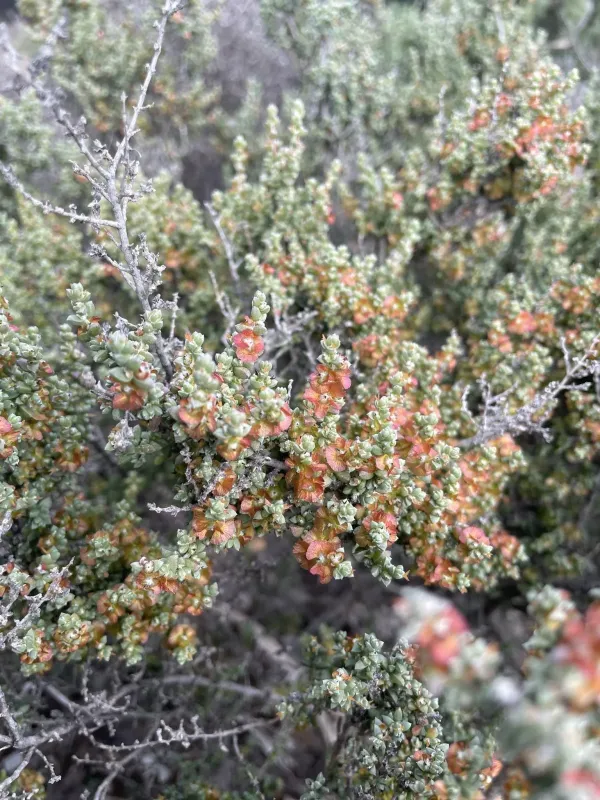
Description
Sowing dates
Maireana oppositifolia is a robust, perennial semi-shrub belonging to the Amaranthaceae family. It is a vital species for arid and saline regions, known for its significant biomass production under adverse environmental conditions.
The optimal sowing time aligns with the onset of the rainy season, allowing the seeds to benefit from consistent moisture for germination. In agricultural settings, sowing is typically carried out in late autumn or early winter.
Direct seeding requires careful soil preparation. Seeds must be sown at a shallow depth to ensure successful emergence, as deep burial significantly reduces the germination rate of the species.
Establishing the crop via seedlings is recommended for high-value areas, as it provides a higher survival rate during the initial growth phase. Seedlings are transplanted when they develop a sturdy root system.
Planting density is determined by the intended use of the land. For grazing purposes, wider spacing is often adopted to promote individual plant vigor and allow for sustainable natural reseeding within the pasture.
Growing requirements
This species is highly regarded for its exceptional salt tolerance, making it an excellent candidate for the reclamation of degraded and saline-affected soils where traditional crops fail to thrive.
The plant thrives in arid and semi-arid climates, demonstrating a high tolerance for extreme heat and prolonged periods of drought. It maintains high metabolic activity even when water availability is severely restricted.
It prefers well-drained soils, including heavy clays and saline flats. While it is hardy, the plant does not tolerate waterlogging, as excessive soil moisture can lead to root system decay and increased susceptibility to fungi.
Management practices emphasize weed control during the early development years. The species has a slow initial growth rate, making it vulnerable to competition from fast-growing invasive weeds.
Fertilization is rarely required, as the shrub is highly adapted to nutrient-poor soils. Over-fertilization, especially with nitrogen, can actually weaken the plant's natural resilience to drought and salt stress.
Main diseases and pests
While highly resilient, the plant can be susceptible to specific root-rot pathogens in poorly drained areas with standing water.
Insect pests, including various species of aphids and leaf-eating beetles, may occasionally cause localized damage during unusually wet and warm spells.
Grazing pressure from feral herbivores or non-managed livestock populations represents a significant threat to young plant stands, as over-defoliation prevents the shrub from reaching reproductive maturity.
Competition from aggressive, invasive weed species can suppress development in degraded landscapes, requiring proactive mechanical intervention in the first two years of establishment.
Excessive browsing of the stem tissue by livestock during drought periods can lead to plant mortality if insufficient recovery time is provided between grazing cycles.
Harvesting
The primary agricultural utility of Maireana oppositifolia is as a fodder source for livestock, particularly sheep, providing essential nutrition during dry seasons when other forage is scarce.
Grazing must be managed carefully using a rotational system. This approach prevents overgrazing of the woody branches, ensuring the longevity and productivity of the plant stands over multiple seasons.
Seed harvesting is conducted when the fruit reaches physiological maturity, indicated by a deep brown coloration. Mechanical harvesting is possible, but hand-collection ensures better purity of the seed lot.
Proper seed storage involves keeping the material in a cool, dry environment to maintain high germination rates, as the oily nature of the seeds makes them sensitive to heat and humidity degradation.
In addition to fodder, the plant is highly valuable for soil stabilization in arid environments, as its deep, expansive root system effectively prevents soil erosion and maintains structure in fragile ecosystems.