
Maireana astrotricha
Maireana astrotricha
Description
Growing requirements
Maireana astrotricha is a resilient perennial shrub belonging to the Amaranthaceae family. It is native to the arid regions of Australia, where it serves as a critical component of the local ecosystem.
The plant is highly adapted to harsh, saline environments and low rainfall conditions. It excels in nutrient-poor soils where competitive vegetation is typically absent.
Climate requirements for this species are strict regarding light exposure; it demands full sun and performs poorly in shaded or waterlogged conditions. It is frost-hardy to a certain extent but thrives best in warm climates.
In agricultural practice, soil drainage is the most vital factor. It cannot tolerate heavy, saturated clays that lead to root zone hypoxia and subsequent plant decline.
Planting efforts should focus on low-impact methods. Direct seeding into prepared furrows in areas with sufficient topsoil moisture is the standard approach for establishing new stands.
Yield
This shrub is primarily valued as a drought-reserve forage for sheep and cattle. Its leaves are rich in minerals, making it a nutritious supplement to dry pasture diets.
Yield capacity is relatively slow due to the plant's strategy of conserving energy in extreme heat. However, it provides consistent forage when grasses have completely died back.
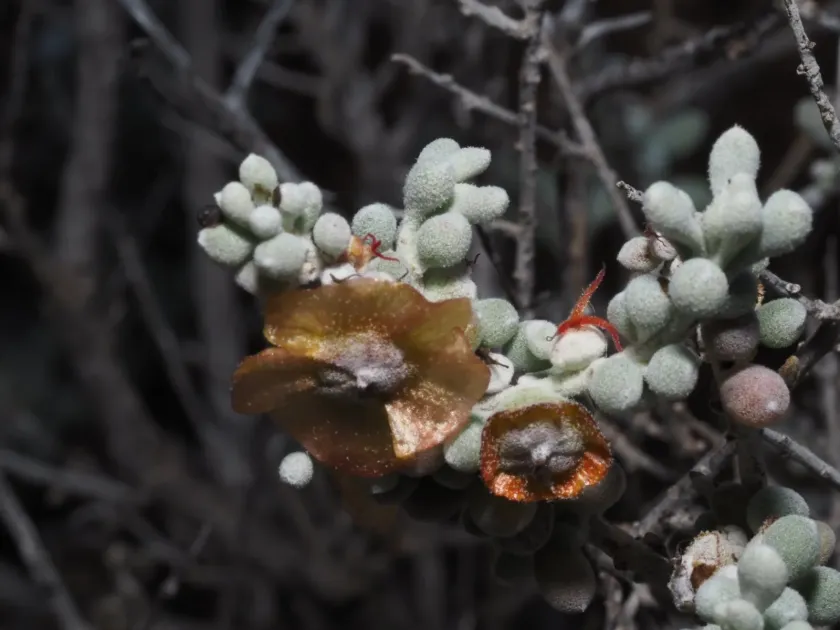
Botanically, it is characterized by dense, star-shaped hairs (astrotrichous) on the leaves, which reflect sunlight and minimize moisture loss through evaporation.
Sustainable use of this species involves careful grazing management. Allowing the shrub to seed and recover between grazing cycles is essential for maintaining stand longevity.
As a forage crop, it provides a vital safety net for livestock producers, ensuring feed security in environments that frequently face multi-year drought cycles.
Main diseases and pests
Insects and certain herbivores pose the most significant threat to plant health. Overgrazing is a major concern, as it removes the photosynthetic surface too quickly.
Disease outbreaks are rare in the dry habitat of Maireana astrotricha. Root rot is generally only observed in experimental or poorly managed sites where drainage is inadequate.
Pest populations, including various beetles and mites, may impact the density of leaves. These are usually managed through natural biological controls rather than chemical intervention.
Competition from invasive weeds can threaten young seedlings. Early weed suppression is crucial for the establishment phase to ensure the crop has access to soil moisture.
Monitoring the plant for signs of stress, such as yellowing leaves or stunted growth, helps identify site-specific issues early before they affect the entire pasture.
Harvesting
Harvesting for forage is performed via controlled grazing of livestock. This is the most efficient method as it reduces the labor costs associated with cutting and bailing.
If seed collection is required for propagation, it should be done manually when the fruit turns a deep color, typically indicating the maturity of the seed.
Mechanical harvesting is not commonly employed due to the rugged nature of the terrain where these shrubs typically grow and their irregular growth habit.
Grazing should be timed to avoid the flowering period, ensuring that the plant has the opportunity to complete its reproductive cycle and replenish the seed bank.
Proper management of the grazing intensity allows the plant to produce enough biomass for the following season, essentially making the crop self-renewing.