
Cotton bush
Maireana aphylla
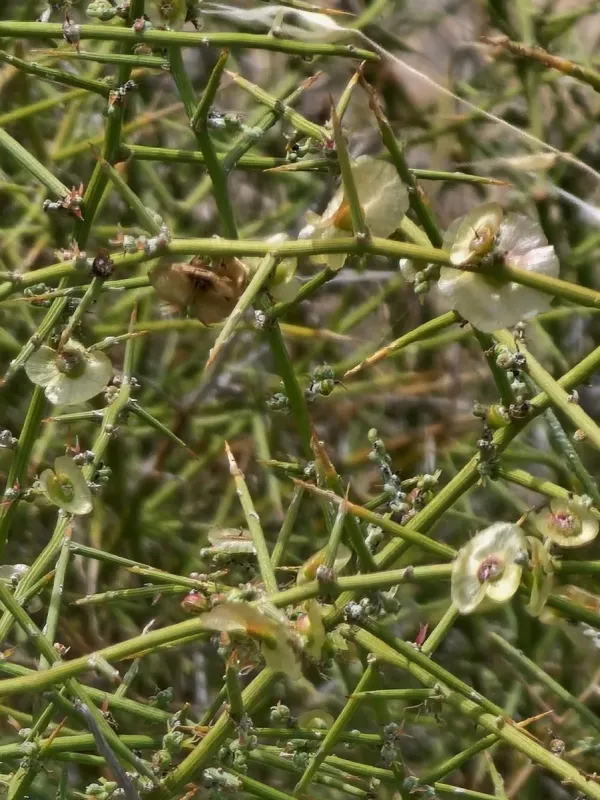
Description
Growing requirements
Cotton bush (Maireana aphylla) is a perennial shrub belonging to the Amaranthaceae family, native to the arid and semi-arid regions of Australia. This plant is highly specialized to survive in extreme heat and saline soil conditions.
The plant grows as a densely branched shrub reaching up to 1.5 meters in height. Its botanical feature involves the reduction of leaves into small scales, meaning photosynthesis occurs primarily in the stems, which is a vital adaptation for desert survival.
It thrives in well-drained clay or loamy soils and is frequently found on saline plains. The plant is remarkably drought-tolerant, remaining active even during extended periods of low rainfall that would destroy most other crops.
Optimal growth requires direct sunlight and well-aerated soil. In agricultural practice, it is considered a vital fodder source, providing sustenance for livestock in challenging environments where conventional forage species fail to survive.
The plant propagates primarily through seeds and shows a strong ability to regenerate under appropriate grazing management. Its resilience to salinity and climate extremes makes it a candidate for land restoration projects in degraded drylands.
Yield
The primary agricultural use of Maireana aphylla is as forage for sheep and cattle. It provides a reliable source of protein and essential minerals during dry seasons, helping maintain animal health when pasture availability is otherwise limited.
Forage yield is highly dependent on rainfall distribution and grazing pressure. Under a controlled rotational grazing regime, the plant can provide consistent growth, ensuring a stable food supply for herds throughout the year.
Main diseases and pests
The main threat to Cotton bush populations is overgrazing, which can lead to the thinning of stands and degradation of the soil cover. Mechanical damage from excessive trampling reduces the vigor and long-term viability of the shrub.
Diseases and pests are generally not a significant limiting factor in its natural range. Management strategies focus on avoiding excessive livestock density to ensure that the natural regenerative capacity of the plant is protected and maintained.