
Squawcarpet
Ceanothus prostratus Benth.
Description
Growing requirements
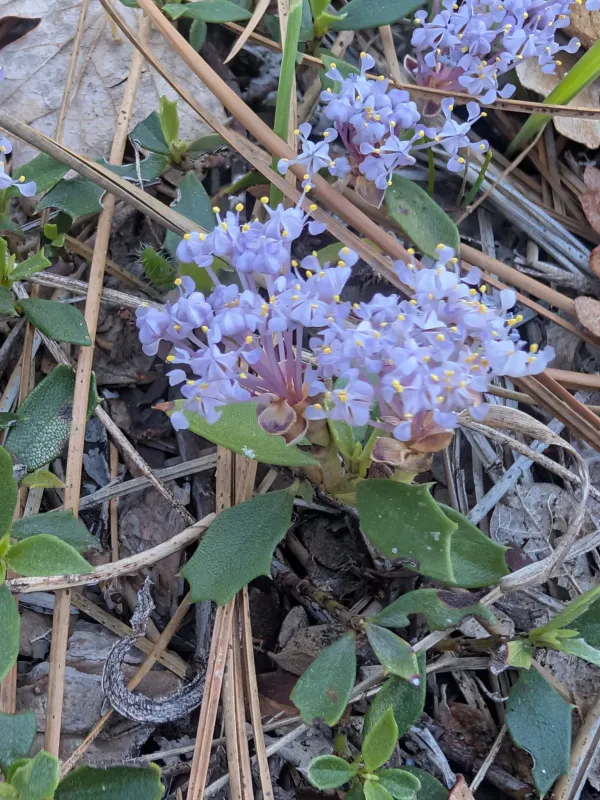
Squawcarpet, scientifically known as Ceanothus prostratus, is a prostrate, evergreen shrub belonging to the Rhamnaceae family. Native to the mountainous regions of western North America, it is highly prized for its ability to form dense, low-growing mats in difficult terrain.
The plant thrives in well-draining, rocky, or sandy soils. It is exceptionally sensitive to waterlogged conditions, which makes proper soil amendment and drainage essential for its long-term survival in garden settings.
Light requirements for Ceanothus prostratus are significant; it prefers full sun exposure to maintain its compact, sprawling habit. In shaded environments, the plant tends to become leggy, loses its decorative appeal, and becomes more susceptible to pests.
This species is well-adapted to Mediterranean-type climates but demonstrates hardiness in various USDA zones. It is particularly efficient at soil stabilization on slopes, making it a functional choice for erosion control in dry, exposed landscape sections.
Cultural maintenance involves minimal intervention once the plant is established. Fertilization is generally not required, and excessive nutrient supply can lead to rapid, weak growth that reduces the plant's resistance to cold and drought.
Main diseases and pests
Root rot is the most significant threat to Squawcarpet, typically triggered by improper irrigation or soil types that retain too much moisture. Ensuring that the crown of the plant remains dry is critical for disease prevention.
Various fungal pathogens, including Armillaria, can infect the root system in poorly drained garden sites. Once a plant is infected, recovery is rare, making prevention through site selection the primary strategy for healthy growth.
Insects like aphids and scale may occasionally infest the foliage, particularly on young, tender growth. While rarely fatal, severe infestations can stunt the plant and necessitate the use of mild horticultural oils or soaps.
Powdery mildew can occur during periods of high humidity and limited airflow. Providing sufficient spacing between plants and avoiding overhead irrigation can significantly lower the incidence of this fungal issue.
Deer and rodents can occasionally cause mechanical damage to the branches. While the plant is relatively resilient, protective measures or fencing may be necessary in areas with high wildlife pressure to ensure the shrub maintains its intended form.