
Ceanothus thyrsiflorus
Ceanothus thyrsiflorus Eschsch.
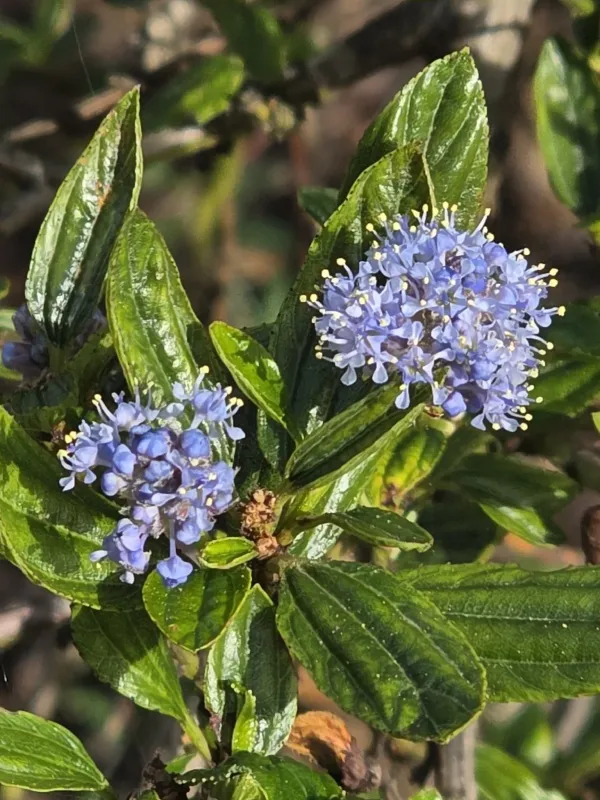
Description
Growing requirements
Ceanothus thyrsiflorus, commonly known as blue blossom or California lilac, belongs to the Rhamnaceae family. This evergreen shrub is native to coastal California and is well-adapted to habitats with rocky, well-drained soils and Mediterranean-like climatic conditions.
The plant thrives in full sun, requiring at least six hours of direct light daily to bloom effectively. It is essential to select a planting site with excellent drainage, as the species is highly susceptible to root rot in waterlogged or heavy clay soil conditions.
In terms of agricultural management, Ceanothus requires minimal fertilizer, as it is adapted to nutrient-poor soils in its natural range. Over-fertilization can result in lush, succulent growth that is prone to pest infestations and frost damage during winter months.
The primary horticultural use of this plant is as an ornamental shrub for gardens, xeriscaping, and erosion control on slopes. Its dense growth habit and profusion of blue flowers make it an excellent choice for hedge formation and wildlife-friendly landscaping.
Botanically, it features small, leathery, alternate leaves and distinctive panicles of vibrant blue flowers. It is relatively drought-tolerant once established, although deep, occasional watering during the first growing season is recommended to promote root development.
Main diseases and pests
Root rot, primarily caused by Phytophthora species, is the most common disease for Ceanothus thyrsiflorus. This is almost exclusively linked to poor drainage and overwatering, emphasizing the need for proper site selection and soil structure management.
Insect pests such as scale insects and aphids often congregate on the undersides of leaves or on new shoots. While a healthy plant can withstand minor infestations, severe cases may lead to stunted growth and the development of sooty mold on honeydew secretions.
Powdery mildew can occur in regions with high humidity and poor air circulation. Ensuring sufficient space between shrubs and maintaining an open canopy structure through light pruning can significantly reduce the risk of fungal outbreaks.
For pest control, horticultural oils or soaps are preferred to avoid damaging beneficial insects. In extreme cases, systemic insecticides may be used, but caution should be exercised to apply them during periods when the plant is not in active bloom.
Sanitation is key to maintaining a healthy shrub. Removing dead or diseased branches annually prevents the colonization of pathogens. Keeping the base of the plant free from debris and weeds also minimizes the environment for potential pests and soil-borne diseases.