
Ceanothus x delileanus
Ceanothus x delileanus Spach
Description
Growing requirements
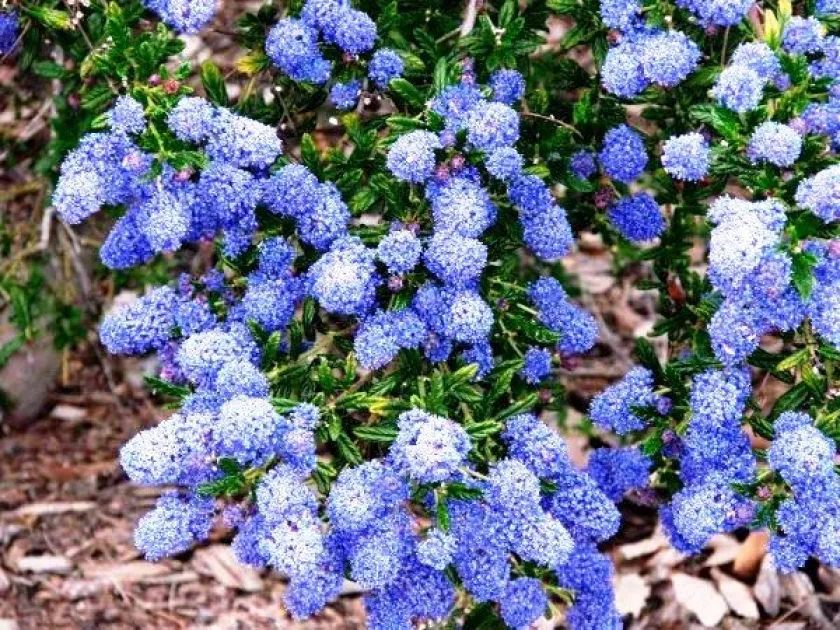
Ceanothus x delileanus is a popular ornamental hybrid shrub belonging to the Rhamnaceae family. It is widely valued in horticulture for its dense clusters of fragrant blue flowers that appear from mid-summer through early autumn.
This shrub thrives in well-drained, fertile soil with a neutral to slightly acidic pH. Proper drainage is essential, as the roots are highly susceptible to rot if water persists in the root zone for extended periods during the dormant season.
The ideal location for this culture is a sunny spot protected from cold, drying winds. While the plant is relatively hardy, it appreciates the warmth of a south-facing wall or a sheltered garden nook in temperate climates to maximize its flowering potential.
General maintenance includes regular watering during the first year of establishment and light pruning in early spring to shape the plant. Over-fertilization should be avoided, as it encourages excessive vegetative growth at the expense of flower production.
In landscaping, it serves as an excellent specimen for border planting or wall training. Its ability to attract pollinators, such as bees and butterflies, makes it a valuable addition to biodiversity-friendly garden designs.
Main diseases and pests
Common pests associated with this plant include aphids and scale insects. If left untreated, these pests can weaken the shrub, leading to stunted growth; regular monitoring during the growing season is highly recommended for control.
Fungal diseases like powdery mildew can occur during periods of high humidity or poor air circulation. Furthermore, root rot caused by stagnant water is a significant threat that often proves fatal for the plant, necessitating strict adherence to moisture management protocols.