
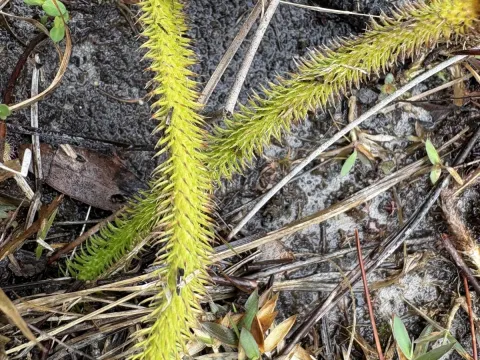
Lycopodiella
Lycopodiella Holub
Lycopodiella is a genus of perennial spore-bearing plants belonging to the family Lycopodiaceae. These plants are characterized by their trailing, branching stems and specific strobili (cones) that develop at the tips of the shoots, distinguishing them from other clubmosses.
What the section contains

Lycopodiella
The habitat requirements for Lycopodiella are highly specialized, typically involving acidic, nutrient-poor, and constantly moist soils. They are frequently found in wetland environments, such as bogs, fens, and damp sandy areas where the water table remains close to the surface throughout the growing season.
Climate plays a critical role in the distribution of these plants, as they thrive in temperate zones with high humidity and stable temperatures. Excessive heat or direct, prolonged sun exposure can cause the plants to desiccate, making them dependent on protected microclimates.
Agrotechnical cultivation of Lycopodiella is not currently feasible due to the complex symbiotic relationship between the plant's gametophyte stage and specific soil mycorrhizal fungi. Without this fungal partner, the spores are unable to germinate and develop into mature sporophytes.
In terms of ecological utility, these plants serve as indicators of stable, acidic wetland ecosystems. Their presence signifies that the hydrological and soil chemistry conditions have remained relatively undisturbed over a significant period.
The primary threat to Lycopodiella populations is the drainage of wetlands, which directly removes the essential moisture required for their survival.
Agricultural runoff and eutrophication significantly alter soil chemistry, making it unsuitable for the growth of this acid-loving, sensitive species.
Mechanical damage to the soil crust and surface layer, often caused by heavy machinery or recreational activities, disrupts the delicate rooting system.
Invasive species encroachment, particularly from taller grasses and woody shrubs, shades out the low-growing Lycopodiella and competes for space.
Pollution from heavy metals and industrial byproducts can cause toxic accumulation in the plant tissues, leading to reduced spore viability and population decline.