
Lomandra longifolia
Lomandra longifolia
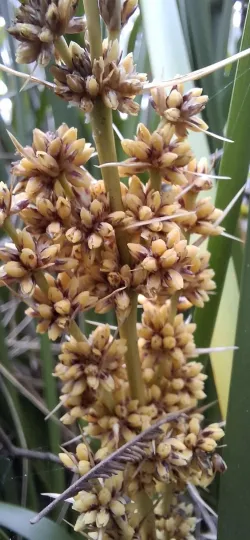
Description
Growing requirements
Lomandra longifolia, commonly known as spiny-headed mat-rush, belongs to the Asparagaceae family. This perennial evergreen grass is native to eastern Australia and has become a staple in various ecological and decorative applications due to its resilience.
The plant features long, thin, strap-like leaves that grow in dense clumps, often reaching heights of nearly one meter. Its botanical structure is highly adapted to harsh conditions, allowing it to thrive where other plants might struggle to survive.
Lomandra longifolia performs best in well-drained soils and can tolerate a wide range of soil compositions, including sandy and rocky substrates. It is known for its remarkable drought tolerance once established, requiring very little supplemental water.
Regarding climate, this species prefers temperate to subtropical conditions. While it is hardy, it does not tolerate severe, prolonged frost, so cultivation in colder regions usually involves keeping the plant in containers that can be moved indoors during winter.
The plant is not nutrient-demanding; in fact, over-fertilizing can negatively impact its natural growth form. It thrives in full sun but maintains good color and density even in semi-shaded areas, making it a versatile choice for landscaping.
Main diseases and pests
The most significant threats to Lomandra longifolia are usually related to improper cultural practices, specifically poor drainage. Excess soil moisture quickly leads to root rot, which is the primary cause of plant death in poorly managed fields.
While generally resistant to most pests, the plant can occasionally suffer from infestations of scale insects, mealybugs, or spider mites, particularly in indoor or greenhouse environments where natural predators are absent.
- Root rot caused by excessive moisture
- Spider mite infestations in hot, dry weather
- Mealybug colonization on dense foliage
- Scale insects affecting plant vigor
Management of these threats involves monitoring the foliage for early signs of insect activity and ensuring that the drainage system is functioning correctly. If chemical treatment is necessary, horticultural oils or systemic insecticides are generally effective.
Maintaining a healthy environment with good air circulation is the best preventative strategy against both fungal and insect pressures. Avoiding dense overhead irrigation also helps keep the leaf crowns dry and less susceptible to disease.
Harvesting
The commercial and practical utility of Lomandra longifolia is primarily centered around urban and residential landscape design. It is widely used for slope stabilization and erosion control because of its deep, fibrous root system.
Traditionally, the leaves of this grass have been utilized for weaving, given their high tensile strength and flexibility. Artisans value the fibers for creating durable mats, baskets, and decorative structural elements in eco-friendly products.
Maintenance involves periodic pruning, typically performed annually or biennially to remove spent foliage. This helps maintain the aesthetic appeal and promotes the development of fresh, vibrant leaves during the main growing season.
Propagation is primarily achieved through root division, which is an efficient way to expand a stand. This process is best performed during the cooler months to ensure rapid re-establishment of the plants in their new locations.
In large-scale production, spacing is essential to ensure adequate airflow between the clumps. This minimizes the risk of pathogen buildup and ensures that each plant has enough space to develop its characteristic mature clump form.