
Meadow vetchling
Lathyrus pratensis L.
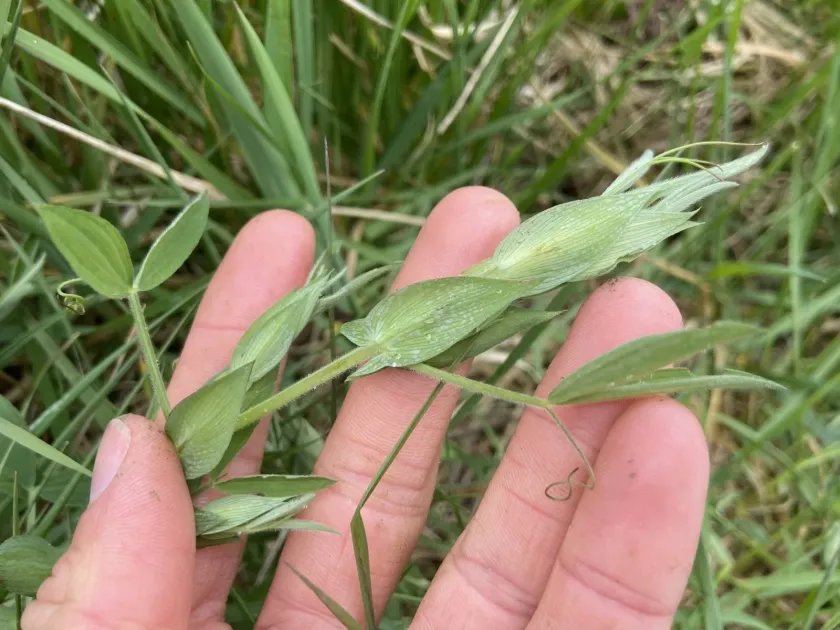
Description
Sowing dates
Sowing typically takes place in early spring once the soil temperature is stable. Because the seeds have a hard seed coat, scarification is recommended to improve germination rates and uniformity.
The seeding rate varies depending on the purpose, generally ranging from 10 to 15 kilograms per hectare. Seeds should be planted at a shallow depth of approximately 2-3 cm to ensure they emerge effectively.
Initial growth is slow as the plant establishes its root system. During the first season, weed control is crucial to ensure that seedlings have enough access to sunlight and nutrients to establish successfully.
Intercropping with grasses like timothy or fescue is a common practice that improves yield and forage quality. This combination provides a balanced diet for livestock and helps maintain a dense, productive pasture.
Once established, the plant spreads through rhizomes, forming a dense sod that outcompetes weeds. It remains productive for several years, provided the site is managed with appropriate nutrient additions.
Growing requirements
Meadow vetchling is a perennial herb belonging to the Fabaceae family, widely recognized for its agricultural value as a nutrient-rich forage crop. It is highly valued for its ability to fix nitrogen, enhancing soil fertility.
The native range of this plant includes Europe and parts of Asia, where it thrives in meadows, forest edges, and riverbanks. It prefers moist, fertile soils and is known for its ability to adapt to varying climates.
Regarding soil requirements, it performs best on loamy or clay-rich soils with good moisture retention. It demonstrates high cold tolerance, making it suitable for temperate regions with significant seasonal temperature fluctuations.
Proper drainage is essential for optimal growth, as the plant does not perform well in stagnant water. It thrives in neutral to slightly alkaline soil environments, where its root system can fully develop.
In agricultural systems, it serves as a key component in hay meadows and pastures. Its high protein content makes it an excellent choice for improving the nutritional profile of livestock diets, whether consumed fresh or as hay.
Main diseases and pests
Meadow vetchling can be affected by fungal diseases such as powdery mildew and rust, especially during wet seasons. Managing humidity levels and ensuring good airflow within the canopy are vital preventative measures.
Pests such as pea weevils and aphids can pose a threat by feeding on the leaves and stems. In severe infestations, these pests can stunt growth and significantly reduce the total yield of forage mass.
Integrated pest management, including crop rotation and the use of resistant varieties, is recommended to minimize chemical use. Monitoring fields regularly allows for early detection of potential outbreaks.
Preventative measures also include maintaining soil health through balanced fertilization. Strong, vigorous plants are inherently more resistant to diseases and pest pressure compared to stressed ones.
In cases of heavy pest pressure, targeted application of approved pesticides may be necessary. However, focusing on cultural practices usually provides the most sustainable control in long-term meadow management.
Harvesting
For hay production, the optimal harvest time is at the beginning of the flowering stage. At this phenological phase, the plant reaches its peak nutritional value, specifically regarding protein content.
When harvesting, it is important to handle the forage gently to prevent the loss of leaves, which are the most nutritious parts. Equipment that avoids excessive mechanical agitation is preferred to preserve quality.
Grazing management should follow a rotational system to allow the meadow vetchling time to recover. This practice prevents overgrazing and encourages the plant to utilize its rhizomes for regrowth.
Seed harvest is conducted when the pods turn dark and dry. To minimize seed shattering, harvest should occur before the pods naturally split, often requiring early morning collection to retain moisture.
After cleaning and drying to appropriate moisture levels, seeds should be stored in cool, dry conditions. Proper storage ensures that seed viability remains high for subsequent planting cycles.