
Everlasting pea
Lathyrus sylvestris L.
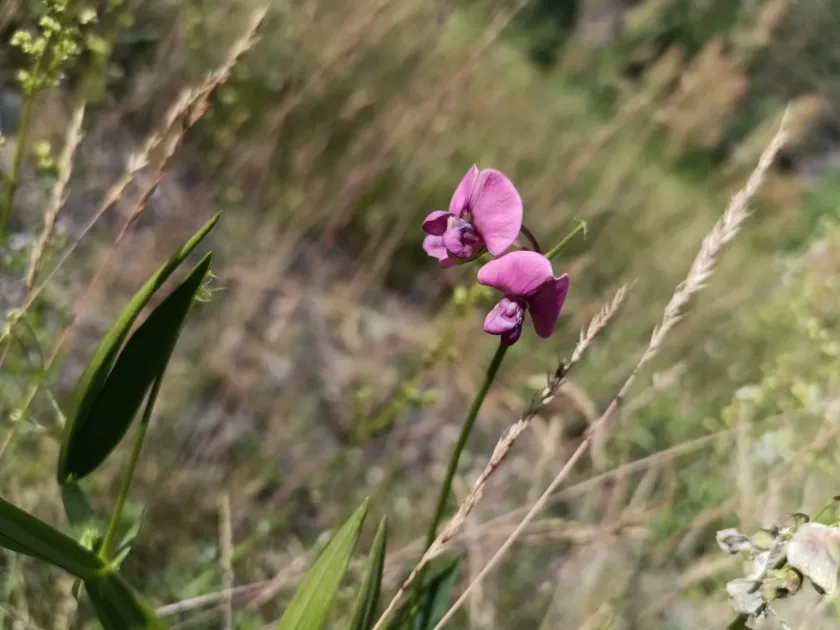
Description
Sowing dates
The everlasting pea, scientifically known as Lathyrus sylvestris, is a robust perennial legume from the Fabaceae family. It is prized for its extensive root system, which provides excellent drought tolerance and long-term soil stabilization in various environmental conditions.
Sowing should typically occur in early spring, as soon as the soil can be worked. The seeds possess a hard seed coat, making scarification a necessary practice to improve germination rates and ensure a more uniform and vigorous stand establishment across the field.
Seeds are usually planted at a depth of 3 to 5 cm, depending on soil texture and moisture content. Precise seed placement is crucial during the first year, as the plant focuses its energy on developing its complex subterranean architecture rather than rapid above-ground growth.
Because the everlasting pea exhibits slow initial development, weed management is a critical task during the first season. Once established, however, it becomes a highly competitive species that can effectively suppress invasive weeds within the meadow or pasture canopy.
Originally native to Europe and Western Asia, this plant thrives in temperate climates. Its ability to fix atmospheric nitrogen via symbiotic bacteria makes it an invaluable asset for sustainable farming systems seeking to reduce their reliance on synthetic fertilizers.
Growing requirements
Everlasting pea is renowned for its exceptional adaptability to a wide range of climatic conditions, including harsh winters and prolonged dry spells. Its hardiness makes it a reliable choice for regions where more fragile forage crops often fail to thrive.
While the plant is quite versatile regarding soil types, it performs best in well-drained loamy or sandy soils with a neutral pH. It is sensitive to waterlogged conditions, so selecting fields with adequate natural drainage is essential for preventing root-related issues.
Although it can tolerate partial shade, the everlasting pea requires full sun exposure to reach its maximum productivity. Planting in open fields or on sparsely forested slopes ensures optimal photosynthesis, resulting in higher biomass yields for the producer.
This species is particularly effective at reclaiming degraded land and protecting slopes from erosion. Its dense root network binds the soil particles together, while its top growth provides a protective cover that mitigates the damaging effects of heavy rainfall and high winds.
Agronomic management should prioritize potassium and phosphorus inputs to support the extensive root growth. Nitrogen fertilization is rarely necessary, as the plant's nitrogen-fixing capabilities are usually sufficient to meet its developmental requirements in healthy soil.
Yield
Productivity of the everlasting pea tends to increase as the stand matures, generally reaching its peak potential from the third year onwards. It serves as a superior source of high-quality protein, which is essential for livestock health and rapid weight gain.
The nutritional profile of this forage crop is characterized by high levels of crude protein and essential amino acids. When harvested at the right time, it produces a palatable and energy-dense hay that contributes significantly to a balanced feeding program.
The total yield of dry matter depends on environmental factors and the frequency of harvests. With proper management and fertilization, producers can obtain multiple cuts per season, maximizing the return on investment from the established perennial forage field.
Incorporating the everlasting pea into grass-legume mixtures is a recommended strategy for optimizing yields. This combination enhances the overall feed quality while simultaneously balancing the nutrient intake and increasing the stand's resistance to local environmental stressors.
It is important to manage grazing intensity carefully, as some parts of the plant contain alkaloids that may affect livestock if consumed in excessive quantities. Proper integration with other forages ensures the everlasting pea remains a safe and productive component of the diet.
Main diseases and pests
Common diseases affecting the everlasting pea include powdery mildew and ascochyta leaf spot. These fungal conditions are most prevalent in humid environments where air circulation within the canopy is poor, potentially reducing both the yield and the aesthetic quality of the forage.
Preventative measures such as maintaining appropriate plant density and practicing crop rotation are highly effective. Fungicide application is rarely required; instead, growers should focus on promoting strong plant health through proper site selection and soil fertility management.
Pest pressures are often linked to legume-specific insects such as pea leaf weevils and aphids. These pests can damage young foliage and roots, which may stunt plant growth during the critical early stages of the growing season if populations are allowed to spiral out of control.
Monitoring the fields for early signs of infestation allows for timely interventions. Protecting the plant during its establishment phase is crucial, as mature stands are generally more resilient to incidental pest feeding and minor disease outbreaks due to their robust nature.
Long-term health can be sustained by using certified, disease-resistant seeds and ensuring that the soil is properly balanced. By minimizing environmental stress, the plants maintain a strong immune system capable of resisting common agricultural pathogens naturally.
Harvesting
The ideal time to harvest for hay is at the beginning of the flowering phase, when the concentration of nutrients in the foliage is at its highest. Cutting later in the cycle leads to stem hardening, which significantly decreases the overall digestibility for livestock.
Using a sickle-bar or disc mower, the stand should be cut at a height of approximately 5 to 7 cm. This ensures that the plant's regenerative points remain intact, allowing for vigorous regrowth and the successful production of subsequent cuttings later in the season.
Drying the forage quickly is essential to retain the leaves, which are the most nutrient-dense part of the plant. Mechanical tedding can facilitate faster moisture loss, protecting the forage from mold growth and ensuring the retention of high protein levels.
For silage production, maintaining the correct moisture content during packing is vital for successful fermentation. Proper compaction and airtight storage prevent spoilage and ensure that the silage remains a high-energy feed source throughout the storage period.
Seed harvest should be timed with the browning of the seed pods. Because the seeds are prone to shattering and dispersal if left too long, harvesting must be executed promptly once maturation is reached to minimize yield losses in the field.