
Ochrus pea
Lathyrus ochrus (L.) DC.
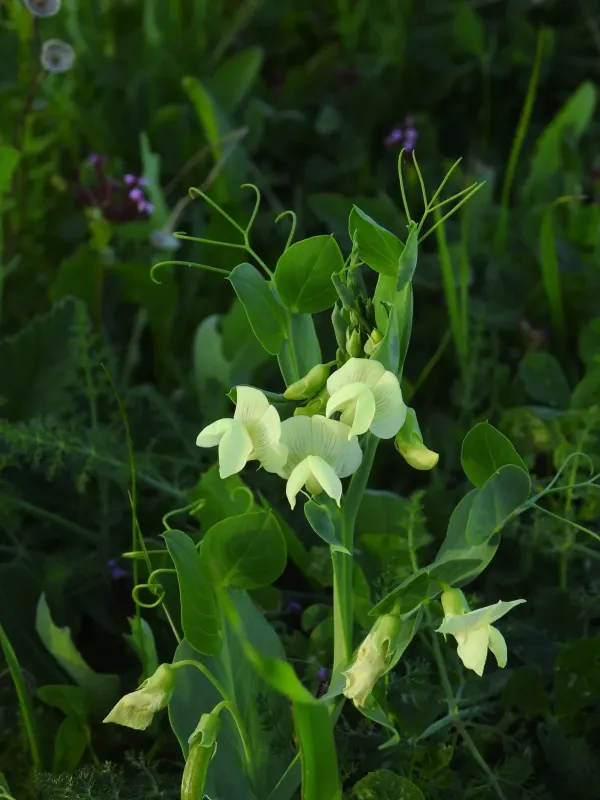
Description
Sowing dates
Ochrus pea (Lathyrus ochrus) is an annual legume species that has traditionally been cultivated in Mediterranean climates. Planting usually occurs in autumn or early spring, depending on the local temperature profile and the necessity to avoid winter frost damage in colder zones.
The seeds require a well-prepared seedbed with fine soil structure to ensure optimal germination. A sowing depth of 3 to 5 centimeters is recommended to protect the seeds from birds and to maintain enough moisture for the seedling's emergence.
Proper spacing between rows is essential for efficient mechanical weed control and to allow sufficient light penetration into the crop canopy. Density depends on whether the crop is aimed for biomass production or grain harvest.
Being a legume, Ochrus pea benefits from inoculation with specific Rhizobium bacteria, which helps in efficient nitrogen fixation. This practice is highly recommended for farmers planting the crop on lands that have not supported legumes for several years.
Early-season growth is relatively rapid, enabling the crop to establish itself firmly and cover the soil, which helps in suppressing competing weed populations effectively throughout the spring season.
Growing requirements
Ochrus pea is well-adapted to semi-arid Mediterranean conditions and exhibits significant drought tolerance. It thrives in regions where winters are mild and summers offer enough heat for grain development without extreme desiccation.
The crop prefers well-drained loamy or sandy-loam soils with a neutral to slightly alkaline pH. It is highly sensitive to waterlogging, which can lead to root rot and poor nodulation, significantly impacting the plant's overall health and vigor.
Adequate sunlight is required for the plant to achieve its maximum biomass potential. While it can handle partial shading in mixed cropping systems, full sun exposure is ideal for optimizing the rate of photosynthesis and protein accumulation.
In terms of fertilization, Ochrus pea is largely self-sufficient regarding nitrogen due to its symbiotic relationship with bacteria. However, phosphorus and potassium applications can significantly enhance root system depth and overall yields.
Effective management of soil aeration is crucial. Compaction should be avoided to allow the roots to penetrate deeper into the soil profile, which enables the plant to access sub-surface water reserves during dry spells.
Yield
The biomass yield of Ochrus pea is highly regarded in sustainable livestock farming. Depending on growing conditions and local fertility, the crop can yield significant quantities of high-protein forage per hectare in a single cut.
For seed production, yields are influenced by the plant's ability to set pods during the flowering phase. Favorable weather conditions during bloom, avoiding extreme heat waves, are essential for maximum grain filling and high production levels.
Crop management practices, such as timely irrigation during the critical flowering stage, can drastically increase yield. Even minimal water supplements at the right time prevent flower abortion and boost pod formation.
The protein content in both the leaves and the seeds makes it a premium feed additive. Consistent field monitoring allows farmers to optimize harvest timing to capture the peak nutritional value of the plant.
Effective weed management is directly correlated with higher yields. By reducing competition for nutrients and water, the crop can dedicate more energy to grain and biomass formation, ensuring a successful harvest cycle.
Main diseases and pests
Like many legumes, Ochrus pea is susceptible to fungal diseases, including powdery mildew and root rots, which often emerge in humid or poorly drained conditions. Crop rotation is the most effective preventative measure against these soil-borne pathogens.
Pest attacks, particularly by weevils and aphids, can cause significant damage to the plant's foliage and developing pods. Integrated pest management (IPM) strategies, including the use of pheromone traps and selective insecticides, are essential for large-scale production.
Competition from invasive weed species is a major threat during the early seedling stage. Once the crop reaches the canopy closure phase, the risk of weed competition decreases significantly, but early mechanical intervention remains vital.
Viral infections can also impact productivity, often spread by insect vectors. Maintaining healthy field margins and avoiding the planting of host plants adjacent to the fields helps reduce the risk of viral outbreaks.
Regular field scouting is essential to identify the presence of pests or disease symptoms before they reach an economic threshold, allowing for timely and targeted intervention strategies.
Harvesting
Harvesting Ochrus pea requires careful timing to optimize the intended end-product. For hay production, cutting should occur when the plants are in full bloom, which is the point where nutrient concentration is at its peak.
For grain, harvest should begin when the majority of pods turn yellow and dry naturally. Delaying the harvest may cause pod shattering, leading to significant field losses, as the seeds tend to drop once fully mature.
Using modern combine harvesters with calibrated reel speeds ensures that seed damage is kept to a minimum. Proper adjustment is necessary to keep the seeds whole, maintaining their value for storage and future seeding.
After the harvest, seeds must be dried immediately to a moisture content of approximately 14 percent to prevent fungal growth and mold during long-term storage in silos or barns.
The remaining straw can be utilized as high-quality compost or bedding material, ensuring that no part of the harvest goes to waste and contributing to the overall sustainability of the farm cycle.