
Rough peavine
Lathyrus hirsutus L.
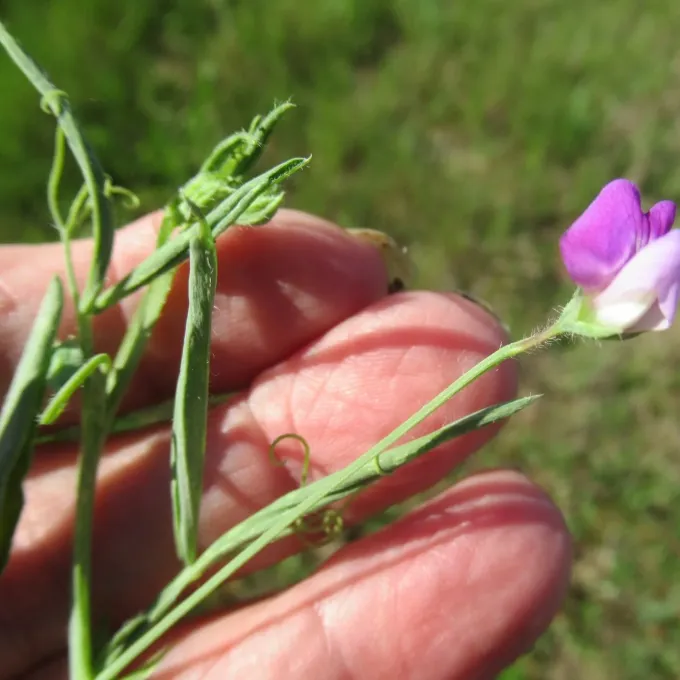
Description
Sowing dates
Rough peavine is a robust annual legume that belongs to the Fabaceae family, valued for its high nutritional value in livestock diets.
Sowing should be performed in early spring, as soon as the soil temperatures reach at least 5–8 degrees Celsius to ensure quick germination.
The recommended seeding rate is between 80 kg and 120 kg per hectare, with a sowing depth of 3–5 cm to guarantee optimal emergence.
Proper soil preparation, including light harrowing, is essential to create an ideal seedbed and ensure uniform seed-to-soil contact.
This crop establishes itself relatively quickly, making it a competitive choice against early-season weeds in managed fields.
Growing requirements
Rough peavine is highly adaptable and thrives in various soil types, ranging from sandy loams to heavier clay-based soils.
The plant prefers neutral to slightly alkaline soil conditions, which significantly improves the efficiency of nitrogen fixation by root nodules.
Adequate soil moisture is critical during the seedling establishment and flowering phases to maximize biomass production.
Being a photophilic species, it requires locations with full sunlight exposure to reach its full growth and yield potential.
Phosphorus and potassium fertilization can be beneficial, especially on nutrient-depleted soils, to enhance root development and plant vigor.
Yield
In favorable conditions, the forage yield of rough peavine can reach up to 20–30 tonnes of green biomass per hectare.
When harvested as hay, the dry matter yield typically ranges from 4 to 6 tonnes per hectare, providing excellent quality fodder.
Seed yields are generally consistent, averaging 1–1.5 tonnes per hectare, depending on local climate and management practices.
The crop's ability to fix atmospheric nitrogen allows it to produce high-quality biomass with lower nitrogen fertilizer input requirements.
Proper irrigation management during dry spells can significantly increase biomass yields and ensure the consistency of the forage produced.
Main diseases and pests
Disease pressure, including powdery mildew and root rot, can occur during periods of high humidity and excessive rainfall.
Pest populations such as pea leaf weevils and aphids can cause substantial damage to young foliage and nitrogen-fixing root nodules.
Viral infections transmitted by sap-sucking insects can severely stunt plant growth and reduce the overall forage quality.
Integrated Pest Management (IPM) strategies, including field monitoring and biocontrol, are essential for maintaining crop health.
- Crop rotation with non-legume species to prevent soil-borne disease accumulation.
- Use of disease-resistant seeds and certified planting material.
- Timely application of selective herbicides or cultural weed control methods.
Harvesting
Harvesting for forage should occur during the peak flowering stage to capture the maximum protein content in the plant tissues.
For hay production, rapid drying and careful handling are required to prevent leaf shattering, as leaves contain the highest nutrient density.
Seed harvest should be timed when the pods turn brown and seeds harden, using direct combining with adjusted header settings.
It is important to harvest before pods reach extreme desiccation to minimize shatter loss and maximize seed recovery rates.
Post-harvest conditioning, such as cleaning and drying to 12% moisture, is necessary to prevent spoilage during long-term storage.