
Laportea ovalifolia
Laportea ovalifolia
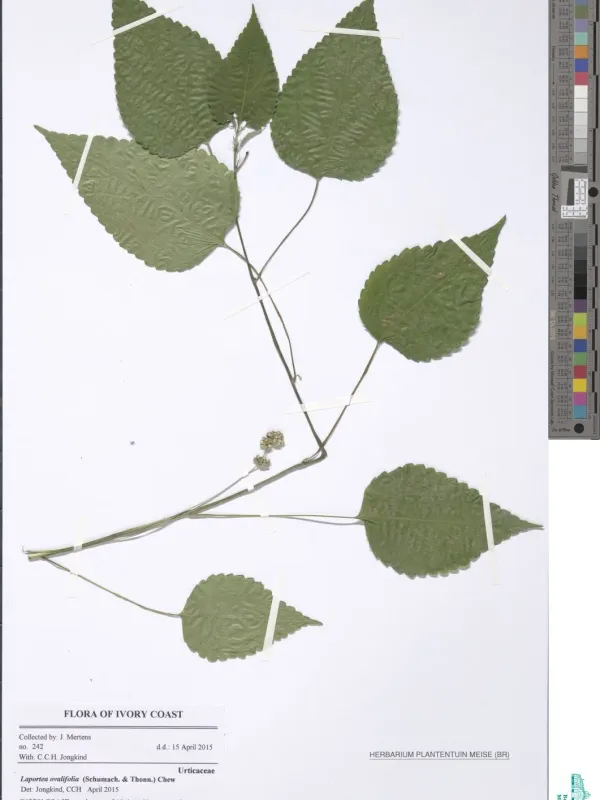
Description
Sowing dates
The sowing of Laportea ovalifolia requires careful preparation of the seedbed, ensuring the substrate is loose, aerated, and enriched with organic matter for rapid seedling emergence.
Seeds should be sown in trays or protected nursery beds where temperature fluctuations are minimized, providing an ideal environment for germination under controlled lighting.
Shallow sowing is essential, as the seeds respond positively to minimal soil coverage, allowing for better access to light and reducing the time needed to break dormancy.
Consistent moisture levels in the seeding tray must be maintained, as a dry substrate will immediately halt the germination process and lead to seed mortality.
Transplanting into the main growing area should be performed when seedlings reach a robust stage, ensuring they are hardened off if moving from indoor environments to the field.
Growing requirements
Laportea ovalifolia belongs to the Urticaceae family and thrives in tropical regions, demanding high humidity and warm temperatures to achieve optimal vegetative growth.
The soil should be rich in nutrients, preferably with a high content of decomposing organic material, and must maintain excellent drainage to prevent root zone saturation.
Light requirements for this species are specific; it prefers dappled sunlight or partial shade, which mimics its natural forest floor habitat and prevents leaf scorching.
Regular irrigation is necessary to support its fast growth rate, especially during dry spells, though the water must be applied carefully to avoid wetting the foliage excessively.
Site selection should prioritize areas that offer protection from strong, dehydrating winds, as these can severely damage the plant's leaves and stunt overall development.
Yield
The economic value of Laportea ovalifolia lies in its biomass production, which is utilized for specific industrial and traditional medical applications in its native regions.
Achieving high yields necessitates a structured fertilization program, focusing on nitrogen-rich organic inputs that support the continuous production of lush green foliage.
Regular harvesting of the mature leaves stimulates the plant to produce lateral branches, thereby increasing the total quantity of harvestable biomass per growing season.
Productivity is closely linked to the density of planting; optimal spacing ensures that each plant has enough room to maximize photosynthetic activity without competing for space.
Quality management during the production process involves monitoring leaf size and health, ensuring that the harvested product meets all established agricultural standards.
Main diseases and pests
Common agricultural pests such as spider mites and aphids are the primary threats, as they colonize the underside of leaves and weaken the plant through sap extraction.
Fungal pathogens, particularly those causing leaf spot or root rot, can devastate a crop if humidity management is poor and air circulation is not prioritized.
Nematodes in the soil pose a significant challenge, potentially affecting root uptake and causing widespread chlorosis and lack of vigor across the entire plantation.
Preventative measures include regular site sanitation, the removal of debris, and the application of organic botanical extracts to discourage pest populations.
Early detection is vital for disease control, and any infected plants must be isolated and removed promptly to stop the spread of infection to healthier neighboring plants.
Harvesting
Harvesting is performed by selectively picking mature leaves by hand, ensuring that the plant's apical meristem remains intact to allow for subsequent regrowth.
The harvest should be conducted during the cooler parts of the day to minimize transpiration and preserve the biochemical integrity of the harvested plant material.
After collection, the leaves must undergo a dehydration process in a shaded, well-ventilated area to reduce moisture content without exposing them to direct UV light.
Proper post-harvest handling ensures that the final product retains its natural color and chemical properties, which are essential for its value in the marketplace.
By staggering the harvest times across different sections of the field, growers can maintain a consistent supply of fresh material throughout the peak growing period.