
Laportea moroides
Laportea moroides
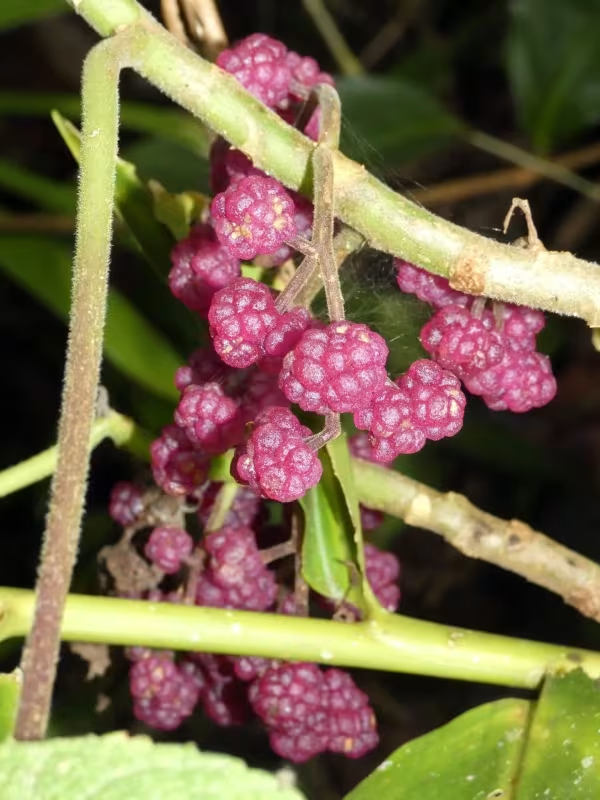
Description
Growing requirements
Laportea moroides, commonly known as the gympie-gympie, is a member of the Urticaceae family. It is indigenous to the tropical rainforest areas of northeastern Australia, the Moluccas, and parts of Indonesia, typically found in disturbed forest gaps.
The plant requires high humidity, consistent soil moisture, and filtered sunlight to flourish. It thrives in fertile, well-draining soils rich in decaying organic matter, which mimic the nutrient-dense environment of the tropical forest floor.
Botanically, Laportea moroides is characterized by its large, heart-shaped serrated leaves and a dense covering of silica-tipped trichomes. These hairs are extremely fragile and act as hypodermic needles that deliver a potent neurotoxic peptide upon contact.
Agricultural cultivation of this species is extremely limited and strictly experimental. The primary barrier is the extreme health risk posed to field workers, as the sting can cause severe, long-lasting pain that may persist for weeks or even months after exposure.
In a controlled environment, temperature regulation is essential, requiring a frost-free, tropical climate. Maintenance of the plant involves sophisticated safety protocols, as any routine pruning or soil management poses a significant threat of accidental injury to the operator.