
Korean boxwood
Buxus sinica (Rehder & E. H. Wilson) M. Cheng var. insularis (Nakai) M. Cheng
Description
Growing requirements
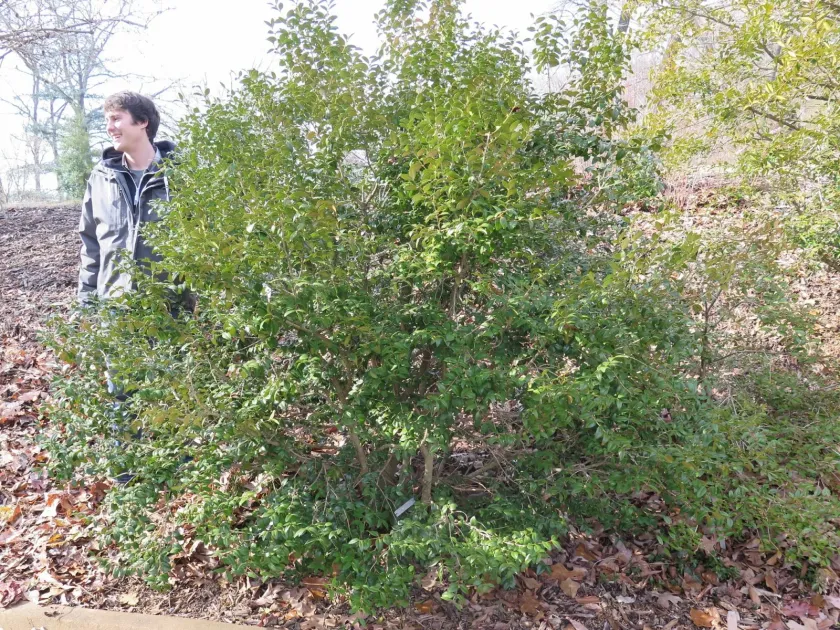
Korean boxwood (Buxus sinica var. insularis) is a hardy, evergreen shrub belonging to the Buxaceae family. Originating from regions in East Asia, including Korea and Japan, it is highly valued for its superior cold tolerance, making it an excellent choice for landscapes in cooler climates where other boxwood species may struggle.
The cultivation of this shrub requires well-drained, fertile soil with a neutral to slightly alkaline pH. Proper soil preparation is essential; the root system is sensitive to waterlogging, so in heavy clay soils, incorporating organic matter and creating a gravel drainage layer is highly recommended to prevent root rot.
While Korean boxwood can adapt to various light conditions, it thrives best in partial shade. Exposure to intense afternoon sun, especially in early spring, can lead to foliage bronzing or scorching. Providing protection from drying winds and harsh midday sun ensures the shrub maintains its deep green, dense foliage throughout the year.
Good horticultural practice involves regular pruning, as this species responds exceptionally well to shearing, allowing for the creation of intricate topiary designs, formal hedges, or low-growing mounds. Mulching around the base is beneficial to retain soil moisture and regulate soil temperature during summer and winter months.
Korean boxwood serves significant roles in both public and private landscape architecture. Due to its slow to moderate growth rate and tight branching structure, it is widely used as a foundational plant for permanent garden borders, privacy hedges, and geometric container displays in urban environments.
Main diseases and pests
The boxwood leafminer and the box tree moth (Cydalima perspectalis) are among the most destructive pests for this species. Regular monitoring of the underside of leaves for eggs and larvae is critical, as heavy infestations can lead to significant defoliation and potential plant death if not treated promptly.
Fungal diseases, such as Volutella blight and Phytophthora root rot, often occur in environments with poor air circulation or excessive moisture. To mitigate these risks, it is essential to keep the interior of the shrub clear of dead debris and ensure that pruning cuts are made with sanitized tools.
Spider mites often attack the plant during hot, dry weather conditions, causing the foliage to lose its luster and appear dusty. Maintaining proper soil moisture and periodic overhead irrigation can create an environment less favorable for mites while promoting the overall health and vigor of the boxwood shrub.
Nutrient deficiencies, particularly nitrogen, can manifest as yellowing leaves. While not a disease, poor nutrition weakens the plant's natural defenses, making it more susceptible to opportunistic pathogens. A balanced slow-release fertilizer applied in early spring helps sustain robust growth and natural resistance.
Integrated Pest Management (IPM) is the most effective approach to safeguarding Korean boxwood plantations. This involves combining cultural practices like proper plant spacing for airflow with selective use of insecticides and fungicides, ensuring that the health of the plant is maintained while minimizing environmental impact.