
Buxus bodinieri
Buxus bodinieri H. Lév.
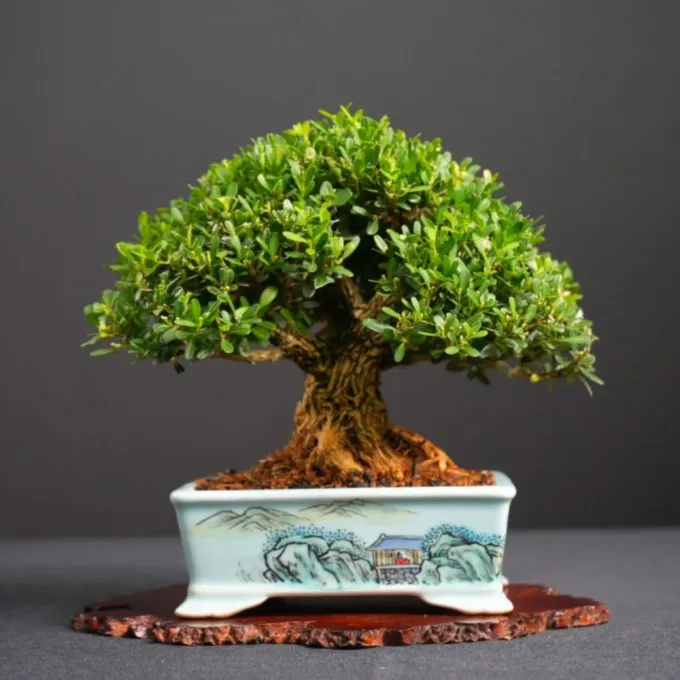
Description
Growing requirements
Buxus bodinieri is an evergreen shrub or small tree belonging to the Buxaceae family. It is native to the forests of China and is highly regarded in botanical circles for its elegant foliage.
The plant thrives in well-drained, fertile soil with a neutral to slightly alkaline pH. It exhibits good tolerance for partial shade, making it a versatile choice for garden understories.
Climate requirements include protection from harsh, drying winds during winter months. While it is hardy in many climates, it benefits from mulching to stabilize root temperature.
Regular maintenance involves light pruning to maintain a dense shape and consistent watering during dry periods to prevent moisture stress.
In landscape design, it is primarily used for ornamental purposes, including borders, hedges, and topiaries due to its slow growth rate and attractive leaf structure.
Main diseases and pests
The box tree moth (Cydalima perspectalis) is the most significant pest threat for Buxus bodinieri, as its larvae can rapidly defoliate healthy plants.
Fungal infections, such as box blight caused by Cylindrocladium, are common when air circulation is poor and humidity levels remain excessively high.
Root rot, driven by waterlogged soil, can lead to the decline of the plant. Ensuring excellent soil structure and drainage is the primary defense against such issues.
Effective pest management involves early detection through routine inspections and the prompt application of specialized pesticides or biological controls.
Sanitation is key; all infected or dead branches should be pruned back to healthy wood and removed from the site to prevent the spread of fungal spores.