
Common box
Buxus sempervirens L.
Description
Growing requirements
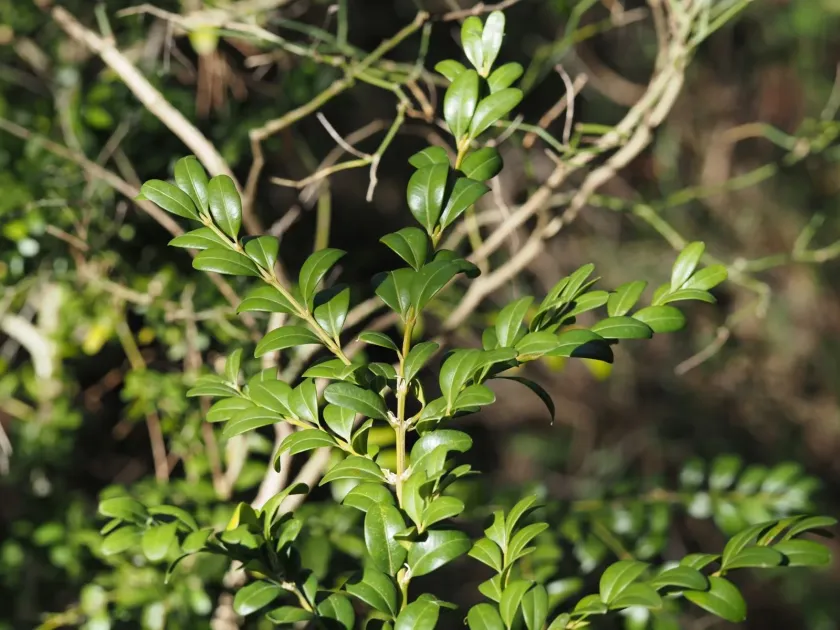
Common box (Buxus sempervirens L.) is a slow-growing evergreen shrub or small tree belonging to the Buxaceae family. Its native range spans across Western and Southern Europe, Northwest Africa, and Western Asia, typically inhabiting woodland understories.
The plant thrives in fertile, well-drained, and alkaline soils. It is remarkably shade-tolerant, making it an excellent choice for ornamental gardening in areas where sunlight is limited, although it performs well in full sun provided there is adequate moisture.
Agronomic requirements include consistent soil moisture, especially during the establishment phase. While the shrub is relatively hardy, it benefits from mulch to protect the shallow root system from extreme temperature fluctuations and excessive evaporation.
Pruning is a fundamental aspect of boxwood management. Due to its dense growth habit and small leaves, it is the premier choice for topiary and formal hedging, requiring annual trimming to maintain structural integrity and desired shapes.
In terms of utility, the primary use of Buxus sempervirens is landscape design. Additionally, the wood is historically significant for its density and fine texture, often utilized in the creation of small decorative objects, woodwind instruments, and intricate carvings.
Main diseases and pests
The box tree moth (Cydalima perspectalis) is currently the most significant threat to the species, as its larvae feed voraciously on leaves. Integrated pest management strategies, including the use of pheromone traps and biological insecticides, are essential for control.
Box blight, caused by fungi like Calonectria pseudonaviculata, can cause severe defoliation and shoot dieback. This disease spreads rapidly in humid, crowded conditions, emphasizing the need for proper plant spacing and sanitation.
Routine maintenance includes removing dead or diseased foliage to promote airflow through the canopy. Early detection and application of appropriate systemic fungicides are crucial to prevent the total loss of individual specimens or hedge sections.