
Shining Koeleria
Koeleria splendens
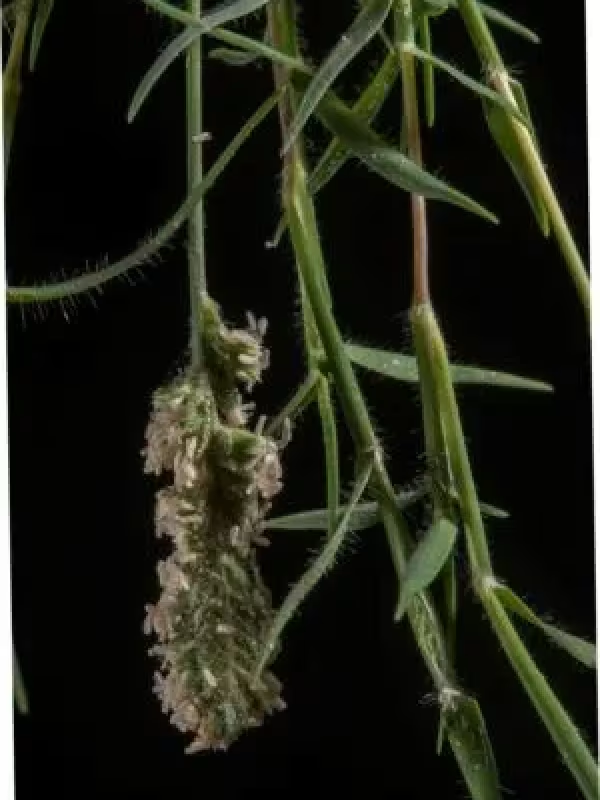
Description
Sowing dates
Shining Koeleria (Koeleria splendens) is a perennial bunchgrass belonging to the Poaceae family. In its natural environment, it reproduces by seed dispersal, but for cultivation purposes, it requires a well-prepared, fine-textured seedbed to ensure successful establishment.
The ideal time for sowing is in early spring, while soil moisture levels are high. Late autumn sowing is also a viable option, as it allows seeds to undergo natural stratification over winter, which often results in more uniform germination during the following spring season.
Due to the small size and light weight of the seeds, they should be sown at a shallow depth of approximately 1 to 1.5 centimeters. Proper seed-to-soil contact is crucial to prevent the seeds from drying out before they develop a functional root system.
During the first year, the crop establishes relatively slowly. It is essential to maintain weed-free conditions during this phase, as competing weeds can severely restrict the growth of young seedlings. Post-emergence weeding should be handled with care to avoid root disturbance.
Using companion crops is generally not recommended for Shining Koeleria, as the grass is sensitive to shading. Competition for light and nutrients can lead to a sparse stand, reducing the potential productivity and long-term viability of the pasture or hay field.
Growing requirements
Shining Koeleria is recognized as a xeromesophyte, meaning it is adapted to temperate environments with moderate moisture but possesses strong drought tolerance. It thrives naturally in open, dry meadows and on rocky or exposed slopes where other species may struggle.
The plant performs best in well-drained soils with a neutral to slightly alkaline pH. It is particularly well-suited for calcareous soils, making it an excellent candidate for land reclamation, erosion control, and restoring degraded landscapes in arid or semi-arid regions.
Winter hardiness is one of the key strengths of this species, allowing it to survive harsh winter conditions and temperature fluctuations. It resumes active growth early in the spring, leveraging nutrients stored in its root systems to establish rapid vegetative cover.
Sunlight is a critical environmental factor for the success of this crop. As a light-demanding grass, it requires full sun to achieve optimal physiological development. Providing shade or allowing the invasion of woody shrubs will result in a significant decline in its population.
While the species does not have high nutritional demands, moderate nitrogen fertilization can boost biomass production. However, over-fertilization should be avoided to prevent excessive vegetative growth that may compromise the plant's natural balance and reproductive capacity.
Yield
The yield of Shining Koeleria is consistent, though it can vary based on soil fertility and annual precipitation levels. It produces high-quality forage, which is highly appreciated in hay production due to its balanced content of fiber and proteins, suitable for ruminant livestock.
As a pasture plant, Shining Koeleria demonstrates excellent resilience to grazing pressure. It has a high regrowth rate after defoliation, allowing it to be used in long-term grazing systems where continuous but controlled usage is required to maintain sward health.
Hay harvesting should ideally occur during the booting stage to maximize the nutritional value. Harvesting later in the season leads to higher stem lignification, which reduces digestibility and overall quality for livestock feed.
Seed production requires careful monitoring to ensure that harvest takes place at the point of maturity but before shattering occurs. The seeds, known for their distinct shiny appearance, should be harvested when the inflorescences are fully developed and dry.
The regrowth capacity allows for multiple cuts per season under favorable weather conditions. It is advisable to limit cutting to two times per year to allow the plants sufficient time to accumulate reserves in their roots before the onset of dormancy, ensuring vigorous spring growth.
Main diseases and pests
Fungal diseases, particularly rusts and powdery mildew, represent the primary threat to Shining Koeleria, especially in areas with high humidity or poor air circulation. Managing plant density is essential to ensure adequate airflow and reduce the incidence of infection.
Insect pests such as grass flies and aphids can affect the crop, particularly during the early vegetative stages. Monitoring for signs of infestation is recommended, and if necessary, integrated pest management practices should be employed to mitigate damage.
Mechanical control of weeds is highly effective for maintaining the health of the stand and reducing the harbor for potential pests and diseases. Rotating grazing patterns also helps prevent the buildup of pathogens, as it allows the vegetation to recover and harden off.
Overgrazing is a significant risk factor, as it weakens the plant's root reserves and leaves it susceptible to environmental stress and disease. Implementing a rotational grazing system helps maintain the vitality of the crop and preserves its competitive edge over weeds.
If a disease outbreak occurs, immediate removal of the affected biomass is a highly effective cultural control method. By harvesting and removing infected material, the inoculum pressure on the field is reduced, preventing the spread to healthy portions of the stand.