
Koeleria brevis
Koeleria brevis
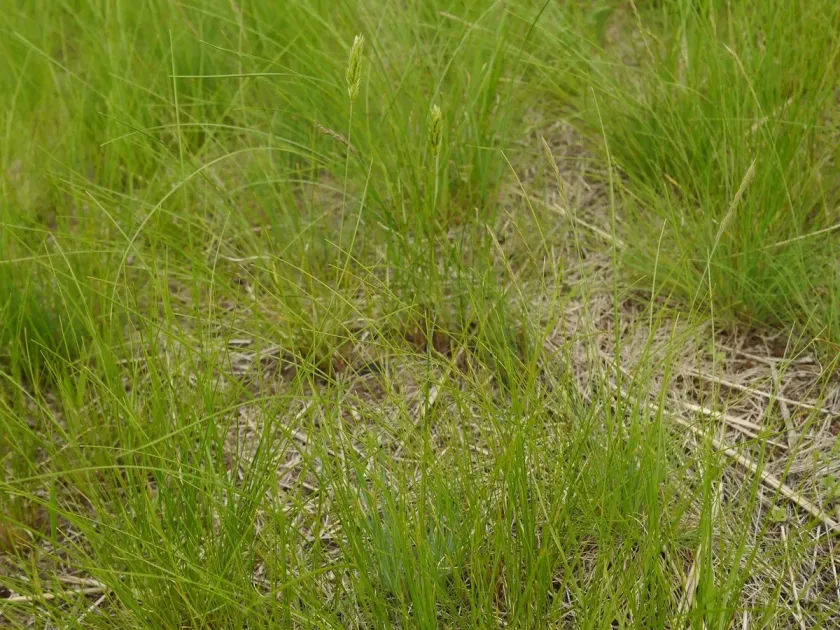
Description
Sowing dates
Sowing of Koeleria brevis for agricultural purposes is primarily conducted in the spring, once soil temperatures reach 8–10 degrees Celsius. Early spring is considered the optimal time, allowing seeds to utilize winter moisture reserves to ensure uniform germination.
Dormant (late autumn) seeding is also acceptable in temperate regions, facilitating natural seed stratification. In this case, planting is scheduled for late October, a few weeks before the soil freezes consistently.
The seeding rate depends on seed purity and germination capacity, typically ranging from 6 to 10 kg per hectare in pure stands. When using drills, it is essential to ensure seeds are placed no deeper than 1–2 centimeters, as the small seeds are sensitive to deep burial.
To improve seed-to-soil contact, it is recommended to roll the area immediately after sowing. This prevents the upper soil layer from drying out and promotes uniform moisture distribution in the germination zone.
Koeleria brevis is characterized by slow development in the initial growth phase, making weed control crucial. It is recommended to employ mechanical cultivation methods or prepare the soil using a clean fallow period before planting.
Growing requirements
Belonging to the Poaceae family, this crop is a typical xerophyte adapted to arid growing conditions. Koeleria brevis demonstrates high ecological plasticity, successfully growing in poor rocky, sandy loam, and sandy soils.
The plant possesses a well-developed root system, enabling efficient water uptake from deep soil horizons. This feature makes it a valuable component for reclaiming degraded pastures and stabilizing slopes susceptible to erosion.
It prefers open, well-lit areas, as shading leads to a sharp decline in productivity and loss of stand density. The crop is extremely cold-tolerant, allowing it to be cultivated successfully in regions with harsh winters and spring frosts.
While soil pH requirements are broad, optimal yields are achieved on slightly alkaline and neutral soils with good drainage. The crop cannot withstand prolonged flooding or waterlogging, which can lead to root rot.
Under intensive management, it responds well to moderate nitrogen fertilizer applications, which stimulate green mass regeneration after cutting. However, excessive mineral nutrition may suppress the development of companion legume species in a mixture.
Yield
The green mass yield of Koeleria brevis depends on growing conditions and the composition of the grass mixture in which it is used. On average, in favorable years, the crop can provide a stable supply of high-quality forage suitable for livestock grazing.
A significant aspect is that the plant maintains high nutritional value even at full maturity, a unique characteristic among many wild grasses. The leaves remain soft, which is valued when used as hay for sheep and horses.
Under intensive grazing, the crop recovers quickly due to its high tillering capacity. Regular grazing promotes sod thickening, which inhibits weed growth and maintains pasture longevity for 5–7 years.
Seed productivity of Koeleria brevis varies, but with proper seed crop management, sufficient material can be harvested to expand planting areas. Harvesting seeds at the wax maturity phase is considered optimal.
Overall productivity can be increased by creating agro-phytocenoses that include resilient legume species. This combination ensures balanced animal nutrition and enhances soil fertility through nitrogen fixation.
Main diseases and pests
The main threat to Koeleria brevis stands is fungal diseases that develop during periods of high humidity. Rust diseases are the most common, significantly reducing photosynthetic activity and forage quality.
Pests, such as cereal flies and plant bugs, can cause localized damage during the early development stages. Regular monitoring of the field allows for early detection and the application of biological or chemical control measures.
Improper grazing management is a significant agronomic threat, as excessive pasture pressure leads to root system depletion and reduced plant vitality. It is important to practice rotational grazing to allow for sufficient rest periods for the forage stand.
- Rust fungi affecting the leaf surface.
- Powdery mildew in overcrowded stands.
- Cereal flies causing damage to young stems in spring.
- Aphids reducing the growth rate of young plants.
To prevent the spread of diseases and pests, crop rotation and timely removal of crop residues are recommended. Using locally adapted varieties with genetic resistance to indigenous pathogens is also highly effective.
Harvesting
Hay harvesting of Koeleria brevis is conducted during the heading phase, when the plant contains the maximum amount of nutrients and digestible sugars. Delayed mowing results in stem coarsening and reduced overall forage digestibility.
To preserve vitamins and minerals, rapid drying of the mown mass in windrows under favorable weather conditions is recommended. The use of active ventilation helps reduce losses during the production of high-quality hay.
For seed production, harvesting is performed via direct or multi-stage methods, depending on the panicle maturity. Monitoring the crop's development phase is critical to avoid seed shattering during harvest.
Post-harvest processing includes cleaning and drying seeds to a moisture content of 12–14%, which ensures the preservation of sowing quality during long-term storage. Properly cleaned seeds maintain high germination rates for several years.
Well-organized harvesting not only yields high-quality produce but also prepares the crop for successful wintering. Timely removal of the harvest prevents premature exhaustion of the plants before the onset of cold weather.