
Koeleria crassipes
Koeleria crassipes
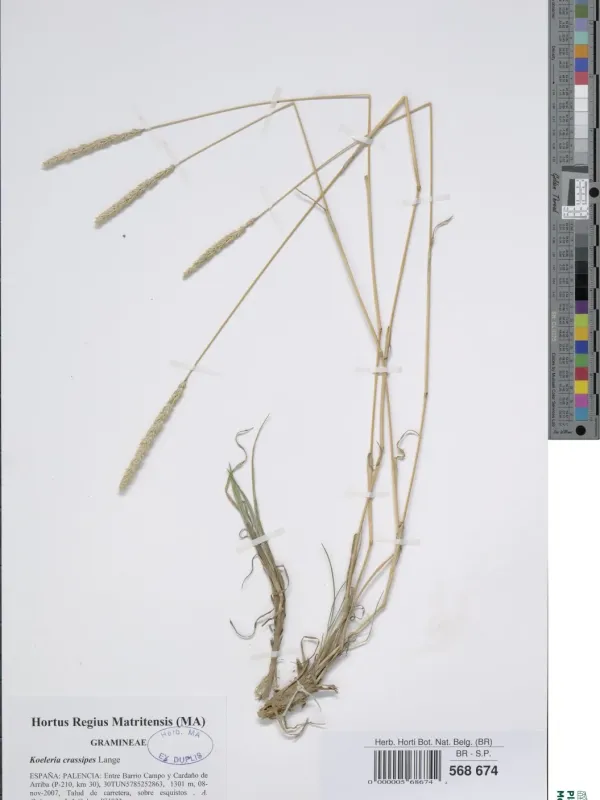
Description
Growing requirements
Koeleria crassipes is a perennial grass species belonging to the Poaceae family. It is recognized for its significant role in arid and semi-arid ecosystems, acting as a stable forage source for livestock.
Botanically, this species features a dense bunch-grass growth habit. Its ability to tolerate nutrient-poor and rocky soil conditions makes it a candidate for rehabilitating degraded land in mountainous regions.
The climate requirements for this species include high light exposure and moderate to low rainfall. It thrives in environments where other grass species would fail due to water stress or physiological drought.
In terms of soil preparation, the plant prefers well-aerated substrates. It does not perform well in heavy clay soils that are prone to waterlogging, as the root system requires significant oxygen exchange.
The agricultural potential of Koeleria crassipes lies in its early spring growth, which fills the vital gap in forage availability before more productive but later-maturing species reach their peak.
Main diseases and pests
Common threats to this species include fungal infections such as rusts and powdery mildew, which typically appear during periods of stagnant humidity or poor air circulation in the field.
Insect pests such as aphids and various grass-feeding larvae can cause significant damage to the leaf biomass if infestation levels are not monitored closely during the vegetative stage.
Overgrazing remains the primary threat to the longevity of Koeleria crassipes. Repeated grazing before the plant has had a chance to store root reserves can lead to thinning stands.
Competition from invasive, faster-growing weeds can also suppress the development of this grass, especially if the stand was established in soils with high residual nitrogen levels.
Integrated pest management strategies are recommended to keep the stand healthy, including rotational grazing schedules that allow for sufficient regrowth and nutrient accumulation in the root system.