
Koeleria cenisia
Koeleria cenisia
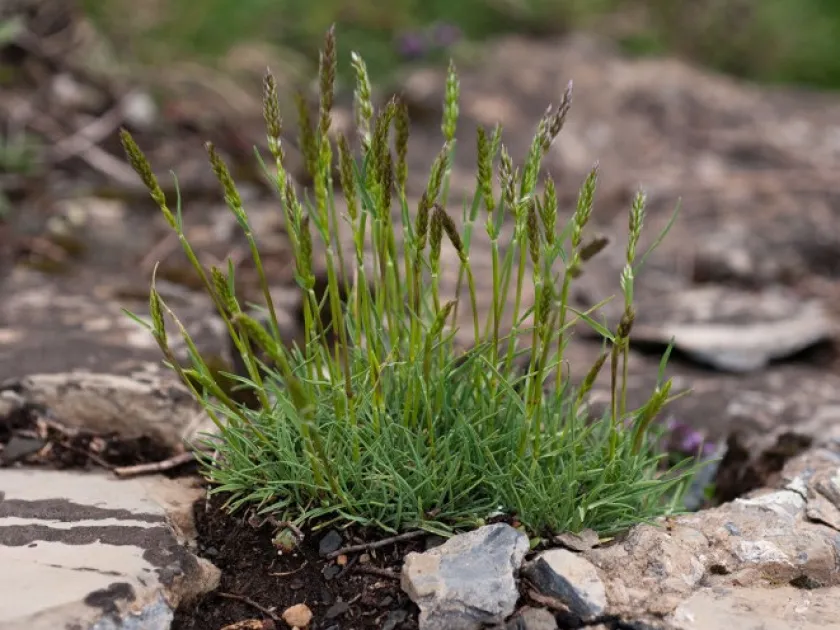
Description
Growing requirements
Koeleria cenisia is a perennial grass species belonging to the family Poaceae. This plant is native to high-altitude and subalpine regions, particularly in the Alps, where it has evolved to thrive in harsh, exposed conditions. It is known for forming dense tufts that help stabilize thin mountain soils.
Botanically, the plant features narrow, often involute leaves and compact, plume-like panicles. Its growth habit is relatively low, typically reaching heights of 20 to 40 cm. This morphology is an adaptation to high wind speeds and short growing seasons prevalent in its native mountainous habitats.
Regarding cultivation requirements, Koeleria cenisia prefers well-drained, calcareous, and rocky substrates. It exhibits extreme frost tolerance and is well-adapted to environments with significant temperature fluctuations. It performs best in full sunlight and requires excellent aeration to prevent root issues.
The agronomic management of this species is relatively low-intensity. It is well-suited for rocky or poor soils where other high-yield forage grasses might fail. The plant does not require high levels of fertilization; in fact, over-fertilization can reduce its resilience and encourage competition from less desirable species.
In terms of agricultural utility, it is a valuable component for mountain meadows and pastures. It provides highly nutritious forage for grazing livestock in remote areas, showing a strong ability to regenerate after being grazed by sheep or cattle.
Main diseases and pests
The main disease threats to Koeleria cenisia include various rust fungi that can infect the foliage during damp, stagnant weather conditions. Proper air circulation within the canopy is essential to minimize the risk of such fungal outbreaks.
Common pests include cereal flies and larvae that may target the crown or the roots, especially in stressed or waterlogged populations. Monitoring is crucial during the early growing season when the plant is most vulnerable to insect activity.
Overgrazing poses a significant threat, as it reduces the plant's ability to store energy for winter survival. Rotational grazing systems are recommended to ensure the plant maintains enough biomass to survive subsequent cold seasons.
Management of these threats focuses on cultural practices rather than chemical control. Ensuring optimal soil drainage and maintaining appropriate grazing pressure are the most effective ways to keep the stand healthy and productive.
Regular inspection of the root system and foliage can help detect potential outbreaks. If patches of yellowing or necrotic tissue appear, management should reassess the drainage and soil pH levels to prevent further decline.