
Koeleria pyramidata
Koeleria pyramidata
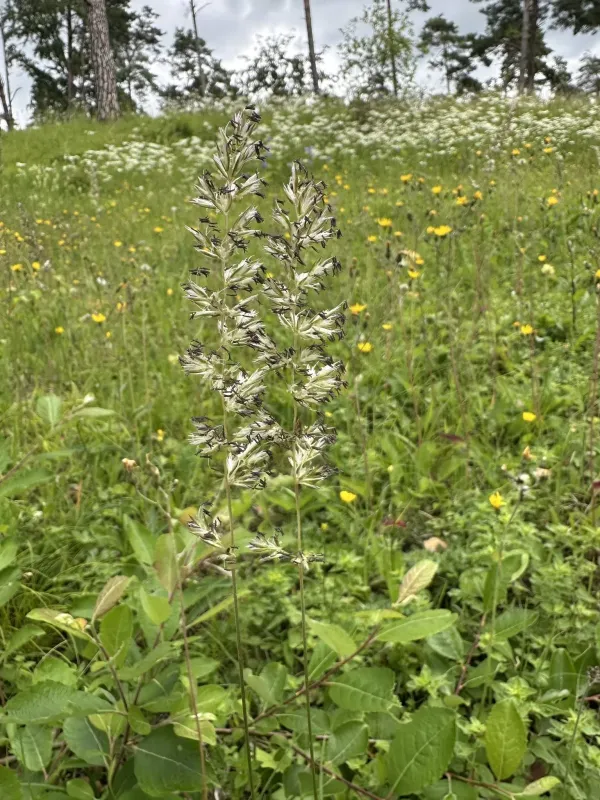
Description
Sowing dates
Koeleria pyramidata is a perennial bunchgrass belonging to the Poaceae family. Known for its slow establishment phase, the timing of sowing is critical for ensuring a competitive and healthy stand in the subsequent years of growth.
The ideal time for planting is early spring, which allows the seedlings to establish a deep root system before the onset of summer heat. Late autumn sowing is also feasible in regions with mild winters to ensure early germination.
Seeds must be sown at a shallow depth, ideally not exceeding 1.5 cm. Due to the small size of the seeds, achieving good soil-to-seed contact is essential for uniform germination and high seedling vigor.
A seeding rate of 6 to 10 kg/ha is recommended for pure stands. However, in mixtures with legumes, the rate should be adjusted according to the desired botanical composition of the pasture or hay meadow.
During the first year, minimal disturbance is necessary to allow the root system to develop fully. Weed management is crucial during this phase to ensure that the young grass is not outcompeted by aggressive weeds.
Growing requirements
This species is highly adapted to dry and sunny environments, often found in natural grasslands with sandy or calcareous soils. It possesses strong drought tolerance, making it suitable for low-input agricultural systems.
Koeleria pyramidata requires full sunlight and will struggle significantly under shade. It performs best in well-drained soils and is highly sensitive to waterlogged conditions, which can lead to root rot.
The plant is highly frost-tolerant, capable of surviving severe winter temperatures without damage. This hardiness makes it a reliable perennial component in temperate climatic zones across the globe.
Regarding soil fertility, it thrives in neutral to slightly alkaline pH levels. It does not require intensive nitrogen fertilization and is often better suited for low-fertility sites compared to more demanding forage grasses.
The agronomic management of this grass focuses on maintaining its competitive advantage. It is a robust species that, once established, can persist for many years with minimal intervention or maintenance.
Yield
The primary use of Koeleria pyramidata is as a high-quality forage grass in grazing systems and hay production. It is highly palatable, particularly when harvested before the seed heads fully mature.
While the overall biomass yield may be lower than intensive agricultural grasses, the forage quality remains consistent, providing essential minerals and nutrients for livestock throughout the growing season.
It is frequently used in land restoration and erosion control projects due to its fibrous root system. These roots help stabilize loose or sloped terrain, contributing to the health of the soil structure.
When used in pasture management, it provides excellent grazing resilience. Its growth pattern allows for quick recovery after moderate grazing pressure, making it a valuable resource in rotationally grazed systems.
Incorporating this species into seed mixes with other native grasses can enhance the biodiversity and stability of forage areas, ensuring production even in years with below-average rainfall.
Main diseases and pests
Koeleria pyramidata is generally resistant to most common grass diseases. However, high humidity levels in dense stands can occasionally lead to rust infections, which manifest as pustules on the leaf surfaces.
Powdery mildew may occur if the stand is overly dense and ventilation is poor. Proper spacing and avoiding excessive nitrogen fertilization are effective strategies to prevent the buildup of this pathogen.
Pest pressure is relatively low; nevertheless, monitoring for cereal flies and root-feeding insects is recommended, especially in young stands where damage to the growing point can be fatal to the plant.
Overgrazing is the most significant management threat, as it reduces the plant's ability to store carbohydrates in the root system, eventually leading to its disappearance from the pasture composition.
- Maintain appropriate stocking rates to prevent overgrazing
- Use certified disease-free seed sources
- Promote air circulation by avoiding excessively high seeding densities
Harvesting
Harvesting for hay should ideally occur at the early heading stage. This provides the best nutritional profile, ensuring high digestibility and protein content for the livestock consuming the fodder.
When collecting seeds, it is important to wait until the panicles reach maturity. Since seed maturity can be uneven, monitoring the color change from green to golden-brown is necessary to determine the optimal harvest window.
Drying the harvested biomass quickly is essential to prevent spoilage. In the field, utilizing raking to turn the windrows can facilitate even drying and improve the final quality of the hay.
Seed storage requires cool and dry conditions to maintain viability. Storing the seeds in breathable containers in a controlled environment will help preserve their germination potential for the following season.
Post-harvest processing involves threshing and cleaning to remove chaff and debris. Utilizing gravity separators or air screens is effective for achieving high-purity seed lots suitable for professional sowing.