
Kleinia talinoides
Kleinia talinoides
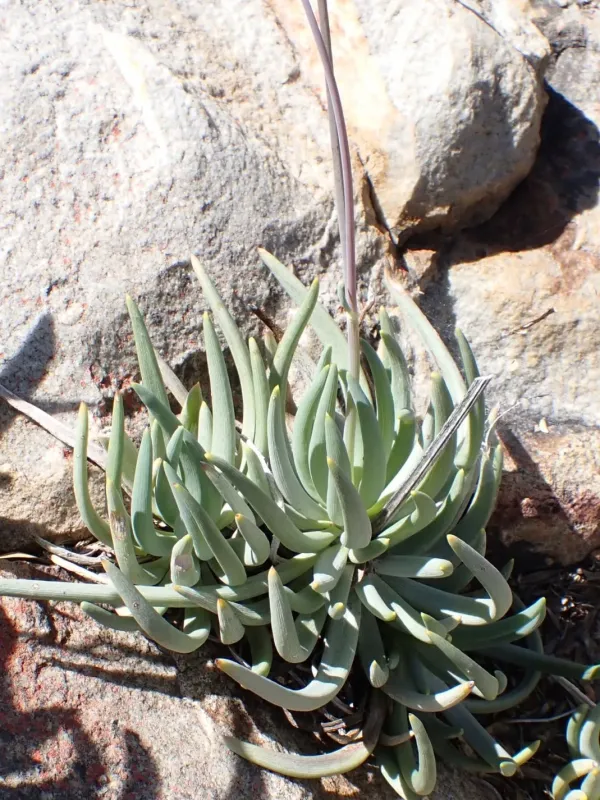
Description
Growing requirements
Kleinia talinoides is a succulent perennial species belonging to the Asteraceae family. It is widely recognized for its cylindrical, fleshy foliage that allows the plant to thrive in arid environments by storing significant water reserves within its tissues.
Native to the dry regions of Southern Africa, this plant is perfectly adapted to high-intensity solar radiation and nutrient-poor, rocky substrates. In cultivation, it requires a position where it can receive several hours of direct sunlight every day to maintain its structural integrity.
The ideal growing medium should be highly porous and inorganic. A mixture consisting of coarse sand, pumice, and a minimal amount of loam is recommended to ensure rapid drainage. Any soil that retains moisture for too long will lead to the rapid decline of the root system.
Temperature requirements for this species are moderate during the growing season, typically between 20°C and 28°C. During the winter dormancy period, temperatures should be allowed to drop, provided that the plant remains dry, to mimic its natural cycle and encourage future flowering.
Maintenance involves precise water management. During the active growth phase, the soil should be watered thoroughly only after it has completely dried out. During the colder months, the plant requires almost complete dryness to survive without succumbing to rot.
Main diseases and pests
The primary health risk for Kleinia talinoides is root rot, which is almost exclusively caused by overwatering or poorly drained soil. Once rot sets in, the plant often loses its stability, and tissue death progresses rapidly from the root collar upwards.
Pest infestations such as mealybugs can occasionally affect the plant, particularly in sheltered or crowded conditions. These pests hide in the crevices of the stem and leaves; regular cleaning and the application of systemic insecticide are effective control methods.